Harvesting Rainwater for Soil Microbes
💧 How Soil Microbes Help Crops Survive Dry Conditions
In many parts of South Africa, farmers face a simple but serious challenge: Rainfall is unreliable — and irrigation water is scarce.
So how can crops grow successfully when water is limited? Scientists are increasingly discovering that the answer lies underground — in the invisible world of soil microbes.
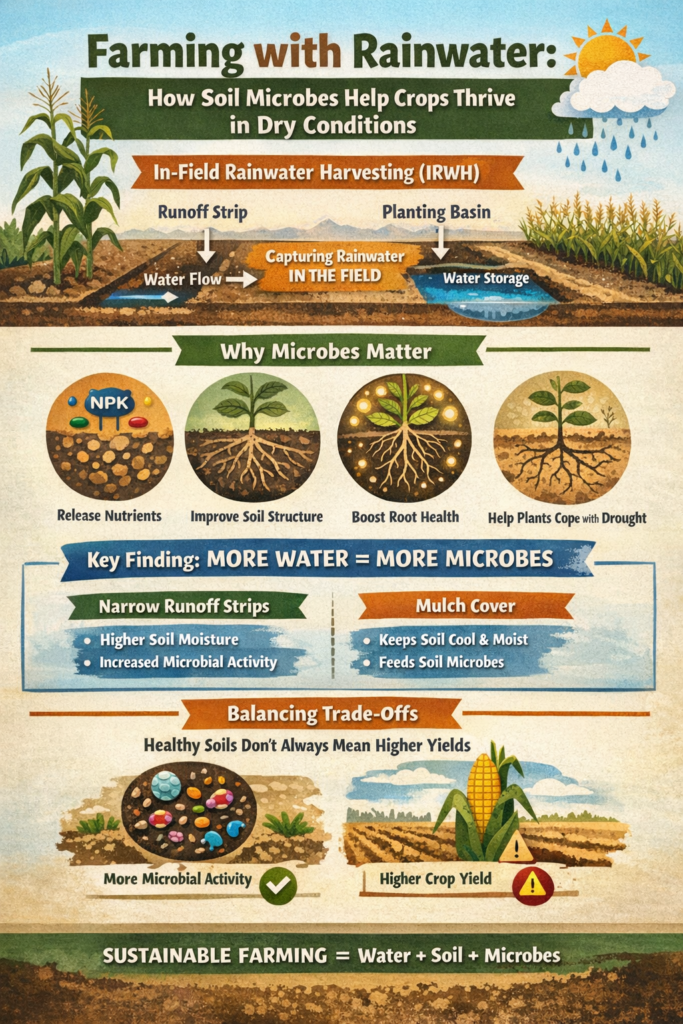
A study conducted at the University of the Free State investigated how farming practices influence microbial life in soils using a technique called In-Field Rainwater Harvesting (IRWH).
What Is In-Field Rainwater Harvesting?
Instead of allowing rainwater to run off fields and disappear, IRWH reshapes farmland so that rainfall is captured and concentrated where crops grow. The system works by:
Creating runoff strips that collect rainwater
Directing water into planting basins
Storing moisture directly in the root zone
Think of it as turning each planting row into a small water-harvesting system.
Why Microbes Matter
Soil is not just dirt — it is alive. containing billions of microorganisms that:
Break down organic matter
Release nutrients
Improve soil structure
Protect plant roots
Help crops tolerate drought
Without active microbial communities, crops struggle even when water is available. The researchers asked an important question:
👉 How do water-harvesting design and mulch cover influence soil microbial activity?
Testing Different Farming Approaches
The study compared four field conditions:
Narrow runoff strips without mulch
Narrow runoff strips with mulch
Wide runoff strips without mulch
Wide runoff strips with mulch
Maize residues were used as mulch — mimicking real farming conditions. Soils were sampled at different depths and around plant roots to measure microbial activity.
The Key Discovery: Water Drives Microbial Life
The strongest result was clear: More soil water meant more microbial activity. Microbial activity increased significantly where soil moisture was higher, especially close to plant roots. This makes sense — microbes need water just as plants do. When soils dried out, microbial activity declined rapidly.
Narrow Strips Worked Best
Fields with narrow runoff strips consistently showed:
✅ Higher soil moisture
✅ Greater microbial activity
✅ Better biological functioning
Because less soil surface was exposed, evaporation decreased and microbes remained active for longer periods.
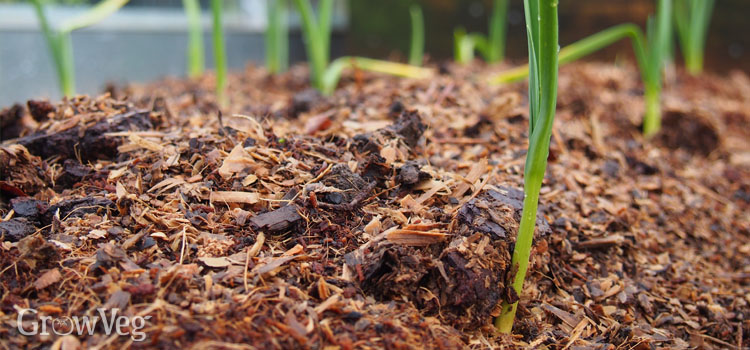
Mulch: Food and Shelter for Microbes
Adding crop residues as mulch had several benefits:
Reduced soil temperature extremes
Conserved moisture
Provided organic carbon — food for microbes
Improved microbial diversity
Under narrow mulched conditions, microbial activity reached its highest levels. The rhizosphere — the soil immediately surrounding roots — showed especially intense microbial activity because roots release sugars that feed microorganisms.
But Higher Microbial Activity Didn’t Always Mean Higher Yield
Interestingly, the highest maize yields were sometimes found in bare runoff areas, where more water accumulated in planting basins. This highlights an important ecological lesson:
🌱 Farming systems involve trade-offs.
🌱 Practices that maximize microbial life do not automatically maximize crop yield in every situation.
A Message for Dryland Agriculture
The study shows that successful farming in semi-arid regions depends on managing water, soil structure, and biology together. No-tillage combined with smart rainwater harvesting, mulch management, and optimized runoff design can improve soil biological processes and water productivity.
In other words:
Sustainable agriculture is not only about conserving water — it is about sustaining the living soil.
🌍 Why This Matters for the Future
As climate change increases drought risk across Africa and other dry regions, farming systems that work with natural soil biology will become increasingly important.
Healthy microbial communities help soils:
store water,
recycle nutrients,
and support crops during stress.
Dryland farming depends as much on microbes as on rainfall itself.