
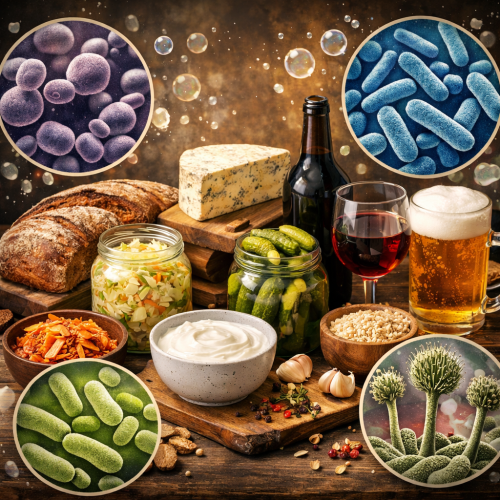
The Invisible Heroes of Fermentation
When you bite into a slice of sourdough bread, sip a glass of wine, or enjoy a spoonful of yogurt, you’re experiencing the work of something invisible yet essential—microbes. These microscopic organisms, including bacteria, yeast, and fungi, are the driving force behind fermentation, a process that has shaped human diets for thousands of years.
But microbes don’t just make food taste good—they transform, preserve, and even enhance its nutritional value. Let’s explore why these tiny life forms are so important in creating some of our favorite fermented foods and drinks.
What Is Fermentation?
Fermentation is a natural metabolic process where microorganisms convert sugars into other compounds—such as acids, gases, or alcohol—often in the absence of oxygen. This transformation is what gives fermented foods their distinctive flavors, textures, and aromas. At its core, fermentation is microbes at work—feeding, growing, and producing by-products that we’ve learned to love.
Microbes: The Master Food Engineers
Different types of microbes play specific roles in fermentation:
Yeasts convert sugars into alcohol and carbon dioxide. They are essential in baking, brewing, and winemaking.
Lactic acid bacteria produce lactic acid, which gives foods like yogurt and sauerkraut their tangy taste.
Molds and fungi are used in more specialized fermentations, such as cheese and soy products.
Each microbe brings its own unique contribution, influencing not just flavor but also texture and preservation.
Why Microbes Are So Important
1. They Create Flavor and Complexity
Without microbes, many foods would be bland and one-dimensional. Fermentation introduces rich, complex flavors—from the sourness of kimchi to the earthy notes of aged cheese.
2. They Preserve Food Naturally
Before refrigeration, fermentation was one of the most effective ways to preserve food. The acids, alcohol, and other compounds produced by microbes inhibit harmful bacteria, allowing food to last much longer.
3. They Boost Nutritional Value
Fermentation can make nutrients more accessible. Microbes break down complex compounds, making vitamins and minerals easier for our bodies to absorb. Some even produce beneficial nutrients like B vitamins.
4. They Support Gut Health
Many fermented foods contain beneficial microbes (often called probiotics) that can support a healthy digestive system. While not all fermented foods retain live cultures, many do—and these can contribute to a balanced gut microbiome.
5. They Reduce Waste
Fermentation allows us to use surplus or perishable ingredients and extend their shelf life. This makes it an important tool for sustainability and reducing food waste.
Everyday Examples of Microbial Magic
You likely consume fermented products regularly, often without thinking about the microbes behind them:
Bread rises thanks to yeast releasing carbon dioxide.
Yogurt thickens and tangs due to lactic acid bacteria.
Beer and wine owe their alcohol content to fermentation.
Pickled vegetables stay crisp and flavorful thanks to microbial activity.
Each of these foods is a result of carefully controlled microbial processes.
The Science Meets Tradition
Fermentation sits at the intersection of science and culture. Traditional practices—passed down through generations—are now being studied and refined using modern microbiology. Yet, at its heart, fermentation remains a simple and natural collaboration between humans and microbes.
Final Thoughts
Microbes may be invisible, but their impact on our food is unmistakable. They enhance flavor, improve nutrition, preserve ingredients, and connect us to culinary traditions across the world.
Next time you enjoy a fermented food or drink, remember: you’re not just eating—you’re experiencing the remarkable work of billions of tiny organisms that have been helping humans thrive for centuries.
Tiny organisms. Massive impact!