
🌱 The Hidden Helpers Inside Plants
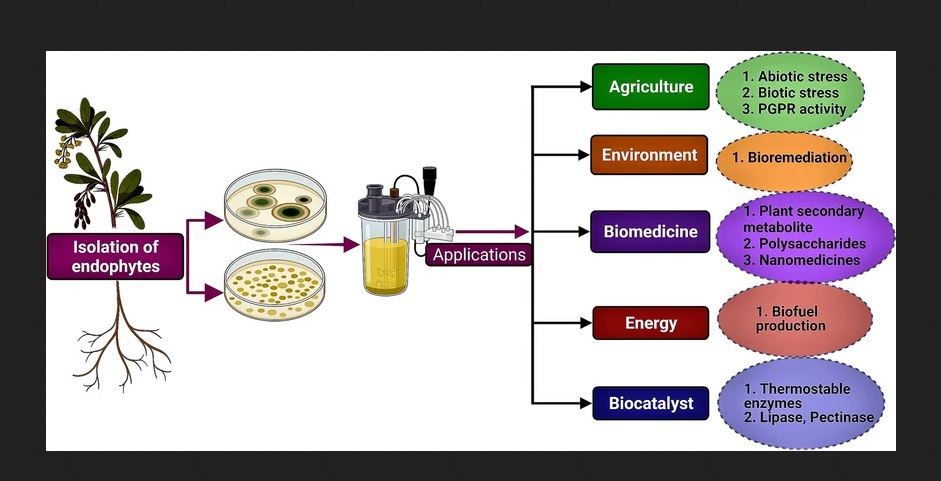
When you look at a healthy plant, you probably see leaves, stems, and roots. What you don’t see is an entire hidden world of microscopic life living inside it—working constantly to keep that plant alive and thriving. These invisible partners are called endophytic bacteria, and they may be one of the most important tools for the future of sustainable agriculture.
🌿 What Are Endophytic Bacteria?
Endophytic bacteria are microorganisms that live inside plant tissues—without causing harm. In fact, many of them do the opposite: they help plants grow stronger, faster, and more resilient. Unlike bacteria that live in the soil around roots, these microbes actually move inside the plant, forming a close, long-term relationship with their host. Think of them as microscopic tenants that pay their rent by helping the plant survive.
💪 How Do These Bacteria Help Plants?
These tiny organisms punch well above their weight. They support plant growth in three major ways:
1. Boosting Growth Naturally
Some endophytic bacteria produce plant hormones—like auxins and gibberellins—that stimulate growth. They can also regulate stress hormones like ethylene, helping plants continue growing even under tough conditions like drought or poor soil.
2. Acting as Natural Fertilizers
Certain bacteria can convert nitrogen from the air into a form plants can use—a process called nitrogen fixation. Others unlock phosphorus in the soil, making essential nutrients more available. This means farmers could potentially use less chemical fertilizer while still maintaining high yields.
3. Defending Against Disease
Endophytic bacteria also act like an internal immune system. They produce compounds that:
- Fight harmful microbes
- Compete with pathogens for nutrients
- Strengthen the plant’s own defenses
In some cases, they’ve reduced plant diseases by as much as 70% or more.
🌾 A Special Partnership: Plants and Nitrogen-Fixing Bacteria
One of the most fascinating examples of this relationship is found in legumes (like beans and peas). Special bacteria called Rhizobium form small nodules on plant roots. Inside these nodules, they convert atmospheric nitrogen into ammonia—a nutrient plants desperately need. In return, the plant provides the bacteria with food and energy. It’s a perfect exchange—nature’s version of teamwork.
🌍 Why This Matters More Than Ever
Modern agriculture relies heavily on chemical fertilizers and pesticides. While effective, these come with serious downsides:
- Environmental pollution
- Soil degradation
- Increasing resistance in pests and pathogens
At the same time, global food demand is rising.
Endophytic bacteria offer a promising alternative. They can:
- Reduce the need for chemicals
- Improve crop yields naturally
- Help plants survive drought, heat, and poor soils
In short, they could be key to sustainable farming and future food security.
⚠️ But It’s Not That Simple
Despite their potential, scientists still don’t fully understand how these bacteria interact with plants.
Some endophytes can even be harmful under certain conditions. Their behavior depends on:
- Plant species
- Soil conditions
- Climate
- Microbial competition
Before we can widely use them in agriculture, we need a deeper understanding of how they work in real-world environments.
🔬 The Future: Farming with Microbes
With advances in genetic research and technologies like next-generation sequencing, scientists are starting to decode these complex relationships.
The goal? To develop:
- Biofertilizers
- Biopesticides
- Microbial “cocktails” tailored to specific crops
This could revolutionize how we grow food—shifting from chemical-heavy farming to
biology-driven systems.
🌱 Final Thought
Plants don’t grow alone—they grow with help. Hidden inside them is a microscopic workforce that feeds, protects, and strengthens them every day. As we search for smarter and more sustainable ways to feed the world, these tiny allies might just be the biggest breakthrough we’ve been overlooking.