
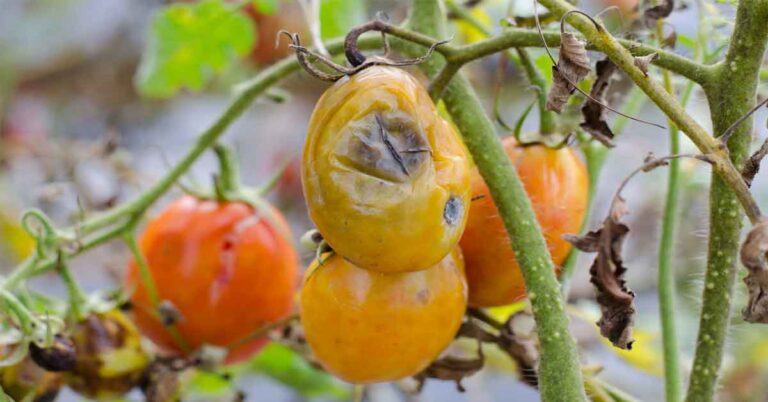
🌱 Why Plant Disease Isn’t the Norm
When we think about agriculture, we often focus on pests, diseases, and crop failures. It’s easy to assume that disease is inevitable — something farmers must constantly fight. But here’s a surprising truth:
👉 In nature, healthy plants are the rule. Disease is the exception.
So why do crops get sick at all? The answer lies in understanding systems, stress, and opportunity.
🌍 A History Written in Plant Disease
Plant diseases have shaped human history more than most people realize.
The Irish Potato Famine wiped out around 25% of Ireland’s population due to late blight.
A single disease nearly destroyed Europe’s vineyards.
Coffee rust in Sri Lanka changed global drinking habits — shifting a nation from coffee to tea.
These aren’t just agricultural problems — they’re societal turning points. Even today, plant diseases:
Reduce food supply
Cause economic losses worth billions
Threaten food security worldwide
🌿 What Does It Mean for a Plant to Be “Healthy”?
A healthy plant isn’t just one that looks green. It’s a plant that can:
Absorb water and nutrients efficiently
Photosynthesise and produce energy
Grow, reproduce, and store reserves
Function without stress or limitation
Disease begins when something interferes with this balance.
⚠️ The Real Causes of Plant Disease
Plant disease doesn’t come from just one source. It’s caused by a combination of factors:
🦠 Biotic (Living)
Fungi
Bacteria
Viruses
Nematodes
🌦️ Abiotic (Environmental)
Drought or waterlogging
Nutrient deficiencies
Extreme temperatures
Pollution or poor soil conditions
👉 Most importantly: These factors don’t act alone — they interact.
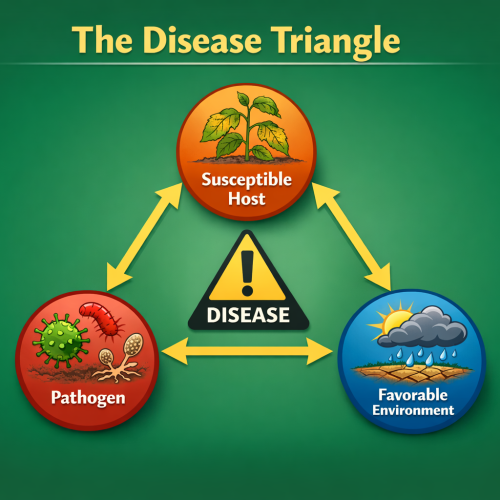
🔺 The Disease Triangle: When Trouble Aligns
For a plant disease to occur, three things must come together:
A susceptible plant
A virulent pathogen
A favourable environment
Remove just one — and disease won’t happen. This simple idea, known as the Disease Triangle, is one of the most powerful concepts in plant science.
⏱️ Timing Is Everything: The Role of Opportunity
Here’s where things get really interesting. Pathogens don’t constantly attack plants. They wait. They exist quietly in soil, plant debris, or even inside the plant — sometimes for long periods without causing harm. Then suddenly, disease appears.
Why?
👉 Because of opportunity. A plant weakened by:
Drought
Nutrient stress
Heat or frost
…creates a window of opportunity for infection. This is known as predisposition — when a plant becomes more vulnerable before infection even begins.
🧠 The Big Idea: Nature Is an Opportunist
Think of nature as constantly watching for openings.
When conditions align:
The plant is stressed
The pathogen is present
The environment is favourable
👉 Disease emerges. This is why outbreaks can feel sudden — but they’re actually the result of multiple small factors lining up over time.
🌱 Why Modern Farming Increases Risk
Ironically, modern agriculture often creates the perfect conditions for disease.
🌾 Monocultures (growing one crop)
Reduce biodiversity
Increase vulnerability
🧬 Selective breeding
Improves yield
But reduces genetic diversity
🌍 New crops in new areas
Encounter unfamiliar pathogens. The result? More opportunities for disease to develop.
🌿Biodiversity: Nature’s Defense System
In natural ecosystems:
High biodiversity = high stability
Systems recover quickly from stress
In agricultural systems:
Low biodiversity = instability
Greater disease risk
This is why natural systems are more resilient — and why farming systems require constant management.
🔍 Why Diagnosis Isn’t Enough
Traditionally, plant disease management focuses on identifying the pathogen. But here’s the problem:
👉 The pathogen is only part of the story.
Even when a pathogen is present, disease may not occur unless:
Environmental conditions are right
The plant is vulnerable
That’s why simply treating the pathogen often fails.
🌍 The Shift to Holistic Plant Health Management
Modern thinking is moving toward a holistic approach. Instead of asking: “What pathogen caused this?”
We ask:“What conditions allowed this disease to happen?”
This includes:
Soil health
Climate conditions
Crop management practices
Biodiversity
Timing
🚜 From Reactive to Proactive Farming
Traditional disease control is often reactive:
Identify disease
Apply treatment
But holistic management is proactive:
Reduce plant stress
Improve system resilience
Prevent disease before it starts
💡 Final Thought: Disease Is a Signal
Plant disease isn’t just a problem — it’s a message. It tells us: Something in the system is out of balance.
By understanding the interactions between plants, pathogens, and the environment, we can move beyond simply fighting disease…
…and start designing systems where disease struggles to exist in the first place.
🌱 Thus, In One Sentence: Plant disease is not inevitable — it is the result of opportunity.