When most people hear the word microbes, they think of germs, illness, and infection. But the truth is far more fascinating—microorganisms are not just agents of disease; they are essential partners in human life, health, and scientific progress.
Today, this natural relationship has evolved into a powerful scientific field known as microbial biotechnology—the use of microbes to create useful products and technology.
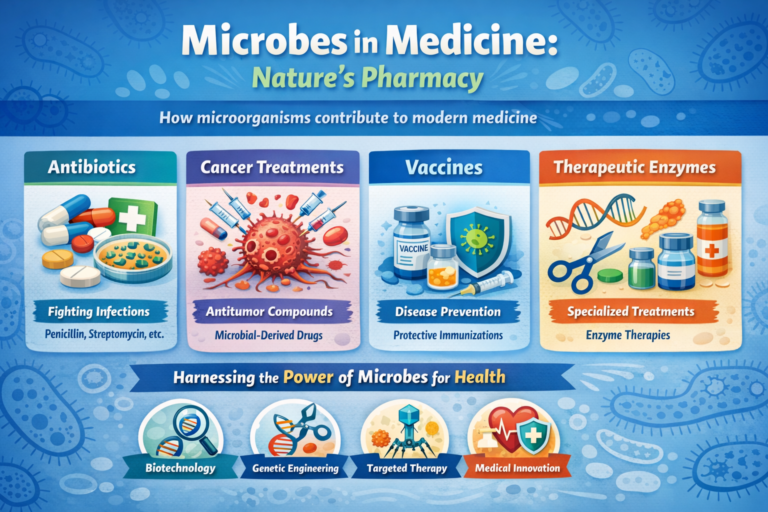
One of the most important contributions of microbes is in medicine. Many of the drugs we rely on today originate from microorganisms.
- Antibiotics used to treat infections
- Anticancer compounds used in chemotherapy
- Vaccines that protect against deadly diseases
- Therapeutic enzymes used in treatment
These life-saving products are often derived directly from microbial processes or engineered using advanced biotechnology.
In fact, more than half of modern drugs—especially those used to fight cancer—have natural origins, many of which involve microbes.
Genetic Engineering: Unlocking Microbial Potential
Modern science has taken microbial usefulness to a whole new level through genetic engineering.
By modifying microbial DNA, scientists can:
- Increase the production of important drugs
- Create entirely new therapeutic compounds
- Develop targeted treatments for genetic diseases
A revolutionary tool in this field is CRISPR technology, which allows precise editing of genes. This has opened the door to personalized medicine—treatments tailored to an individual’s genetic makeup.
Fighting Disease with Microbes
Ironically, microbes are not only the cause of disease—they are also part of the cure.
Scientists are using bacteria and other microorganisms to:
- Deliver drugs directly to diseased cells
- Target cancer cells more precisely
- Restore healthy gut microbiomes
There is even research into using viruses that infect bacteria (called bacteriophages) as alternatives to antibiotics, especially in the fight against antibiotic resistance.
Beyond medicine, microbes are helping to solve environmental and technological challenges.
For example, certain bacteria can produce bioplastics, which are biodegradable and more environmentally friendly than traditional plastics. These materials are now being explored for:
- Drug delivery systems
- Tissue engineering
- Medical implants
The Challenges Ahead
Despite their benefits, microbes also present challenges:
- Antibiotic resistance is a growing global health threat
- Some bacteria can evade the immune system
- New therapies (like phage therapy) still require further research and safety validation
Balancing the risks and benefits of microbes is one of the key scientific challenges of our time.
Conclusion: Rethinking Microbes
Microbes are far more than invisible enemies—they are indispensable allies in our lives. From food production to cutting-edge medical treatments, they are at the heart of innovation and survival. As science continues to unlock their potential, microbes may hold the key to solving some of humanity’s biggest challenges—from disease to sustainability.