
Employing Microbes to Protect and Nourish Plants
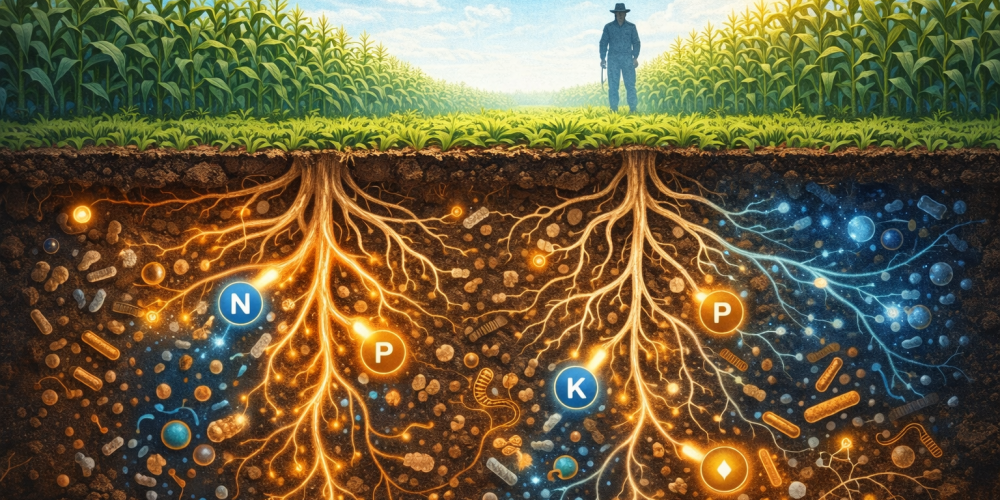
🧫 What Are Microbial Inoculants?
Microbial inoculants are carefully selected beneficial bacteria or fungi applied to crops to improve plant health.
They can:
Fix atmospheric nitrogen
Unlock unavailable phosphorus and potassium
Produce plant growth hormones
Suppress pathogens
Trigger plant immune responses
Improve resistance to drought and stress
Some are single strains. Increasingly, they are consortia — mixtures of multiple compatible species working together. Think of them as probiotic blends for plants.
🛡 How Microbes Protect Plants from Disease
Plant disease occurs when a pathogen, a susceptible plant, and favourable conditions meet. Beneficial microbes can break this cycle by:
Producing natural antibiotics
Competing with pathogens for nutrients
Parasitising harmful fungi
Activating plant immune systems
Two powerful plant defence systems can be triggered:
Induced Systemic Resistance (ISR)
Systemic Acquired Resistance (SAR)
Instead of attacking the pathogen directly, microbes help the plant strengthen its own defences — a biological vaccination effect.
🌾 Feeding Plants Naturally
Nitrogen is essential for plant growth, but most nitrogen in the atmosphere is unusable by plants. Certain bacteria can convert atmospheric nitrogen into plant-usable forms — a process called biological nitrogen fixation.
Other microbes:
Dissolve phosphorus locked in soil minerals
Release potassium from unavailable compounds
Produce siderophores that mobilise iron and micronutrients
Mycorrhizal fungi extend root systems through underground fungal networks, dramatically increasing nutrient and water absorption.
Together, these organisms can reduce dependence on industrial fertilisers.
🤝 Why Microbial Consortia Work Better
Single microbial strains can help plants. But mixtures — consortia — often work better. Why?
Because different species:
Perform complementary functions
Support each other
Adapt to diverse soil conditions
Provide broader protection
Research shows multi-strain consortia can significantly increase yields and reduce disease more effectively than individual strains alone. Agriculture is complex. Microbial solutions should be too.
🌍 Are They as Effective as Fertiliser and Pesticides?
Studies show microbial biofertilisers:
Improve growth compared to untreated crops
Allow fertiliser use to be reduced by 50–75% while maintaining yields
Biological control agents can reduce disease by up to 70%. They may not completely replace conventional inputs — but they can significantly reduce dependency.
And they come with a major advantage: They are safer for humans, animals, and ecosystems.
🌱 Long-Term Success Depends on Soil Health
For beneficial microbes to thrive, farming practices must support soil life.
Important strategies include:
Reduced tillage
Cover cropping
Organic amendments
Mulching
Regenerative farming methods
Healthy soils create stable microbial ecosystems — and stable microbial ecosystems create resilient crops.
⚠ Challenges Ahead
Despite their promise, microbial inoculants face obstacles:
Field performance can vary by location
Native soil microbes may outcompete introduced strains
Host specificity can limit effectiveness
Large-scale reproducibility remains a challenge
However, new tools are emerging and the field is evolving rapidly:
Advanced sequencing technologies
Synthetic microbial communities
Improved formulation and delivery systems
🌎 A Biological Revolution in Agriculture?
As global populations grow and climate change intensifies, agriculture must become more productive — without further damaging ecosystems.
Microbial consortia offer a powerful opportunity:
Higher yields
Lower chemical inputs
Healthier soils
Reduced environmental harm
Greater food security
The future of farming may not lie in stronger chemicals — but in smarter biology. Beneath every field lies an invisible workforce.
We are only beginning to understand its power.