The Hidden Ecosystem Inside Your Body
Introduction
The human body is home to an astonishing number of microscopic organisms. In fact, trillions of bacteria, fungi, viruses, and other microbes live on and inside us. Together, they form what scientists call the human microbiome.
For decades microbes were mostly associated with disease. But research in Microbiology and Genomics has transformed our understanding. Scientists now know that many of these microorganisms are not enemies at all—they are essential partners that help keep us healthy. In many ways, the human body is less like a single organism and more like a complex ecosystem.
What Is the Human Microbiome?
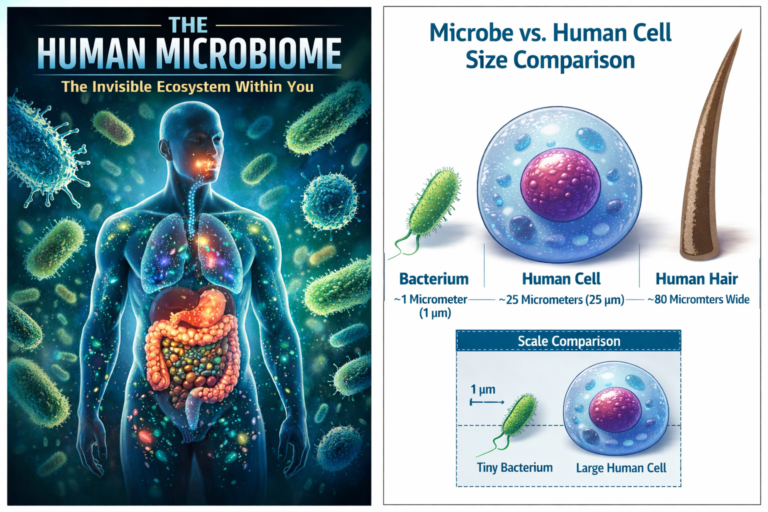
The human microbiome refers to all the microorganisms that live on and inside the human body, as well as the genetic material they contain. These microbes colonize several parts of the body, including:
- The digestive tract
- The skin
- The mouth
- The respiratory system
- The urogenital tract
Each of these environments supports its own unique microbial community. A major breakthrough in understanding these microbial communities came with the launch of the Human Microbiome Project in 2007. This international effort set out to identify and map the microbes living in and on the human body. The results revealed something remarkable: microbial cells in the body are roughly comparable in number to human cells, and their genes vastly outnumber our own.
The Gut Microbiome: Your Internal Microbial City
The largest and most important microbial community lives in the digestive system, particularly the large intestine. This is known as the gut microbiome. Gut microbes perform many important functions that humans cannot do on their own. These include:
Digesting Complex Foods
Humans lack the enzymes needed to break down certain plant fibers. Gut bacteria fill this gap by fermenting these fibers and turning them into useful compounds that nourish the intestinal lining.
Producing Essential Vitamins
Some gut microbes produce vitamins that our bodies need, including vitamin K and certain B vitamins.
Training the Immune System
The microbiome plays a key role in educating the immune system to distinguish between harmful pathogens and harmless substances.
Protecting Against Harmful Microbes
Beneficial microbes compete with harmful bacteria for space and nutrients, helping prevent infections.
The Gut–Brain Connection
One of the most fascinating discoveries in recent years is the gut–brain axis. Scientists have found that microbes in the gut communicate with the brain through nerves, hormones, and immune signals.
Research suggests the microbiome may influence:
- Mood
- Stress responses
- Sleep
- Cognitive function
Some scientists even believe microbial imbalances could contribute to certain neurological and psychological conditions.
When the Microbiome Becomes Unbalanced
A healthy microbiome contains a diverse and balanced community of microbes. But disruptions can occur. This imbalance is known as dysbiosis. Dysbiosis has been linked to several health conditions, including:
Scientists are still investigating whether microbiome changes cause these diseases or result from them—but the connection is becoming increasingly clear.
What Shapes Your Microbiome?
Every person’s microbiome is unique. Several factors influence which microbes live in our bodies.
Birth
Babies begin acquiring microbes during birth. Those born vaginally receive microbes from their mother’s birth canal, while cesarean births introduce a different set of microbes.
Diet
Diet is one of the strongest influences on the microbiome. Foods rich in plant fiber help feed beneficial bacteria.
Antibiotics
While antibiotics save lives, they can also wipe out beneficial microbes along with harmful ones.
Environment
Where we live, the animals we interact with, and even the soil around us can influence our microbial communities.
Age
The microbiome changes throughout life, from infancy to old age.
Feeding Your Microbial Partners
If microbes depend on what we eat, then our diet directly affects their survival. Foods that support beneficial microbes include:
Fiber-rich foods
- Whole grains
- Beans and lentils
- Vegetables
- Fruits
Fermented foods
- Yogurt
- Kefir
- Sauerkraut
- Kimchi
These foods supply prebiotics (food for microbes) and probiotics (beneficial microbes themselves). A diet rich in diverse plant foods helps maintain a diverse microbiome, which is often linked to better health.
The Future of Microbiome Medicine
Scientists are now exploring ways to use the microbiome to treat disease. One example is fecal microbiota transplantation (FMT), where microbes from a healthy donor are transferred to a patient to restore microbial balance. This treatment has proven extremely effective for certain intestinal infections. In the future, doctors may be able to prescribe personalized microbiome therapies, tailored to an individual’s microbial profile.
Conclusions
The human microbiome represents one of the most exciting frontiers in modern biology. These microscopic organisms help digest our food, protect us from disease, and may even influence our thoughts and emotions. Far from being passive passengers, microbes are active participants in human health. Understanding and nurturing this hidden ecosystem could transform the way we think about medicine, nutrition, and our relationship with the microbial world.