
How the Rhizosphere Microbiome Shapes Plant Health
When we think about plant health, we often focus on what we can see—leaves, stems, pests, and diseases. But the real action happens underground, in a dynamic and invisible ecosystem teeming with life. This is the rhizosphere microbiome—a powerful, complex community of microorganisms that plays a crucial role in plant growth, resilience, and survival.
Welcome to one of the most fascinating and important frontiers in modern agriculture.
What Is the Rhizosphere Microbiome?
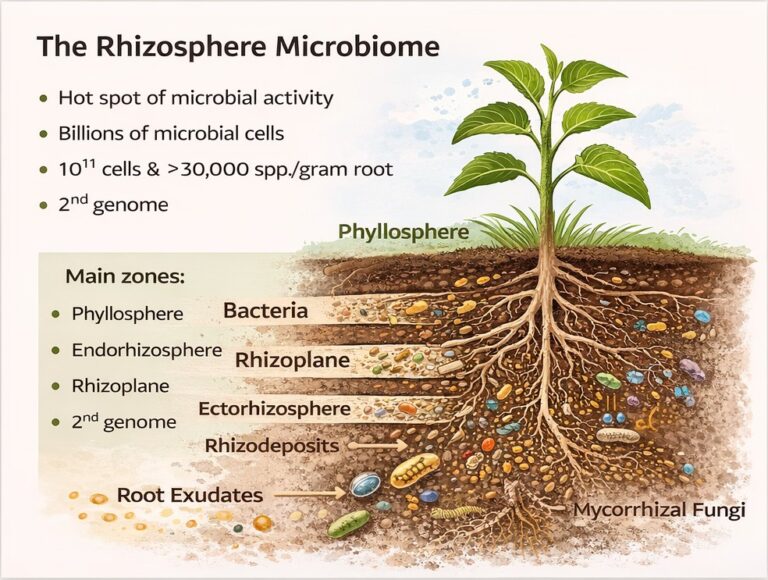
The rhizosphere refers to the narrow region of soil directly influenced by plant roots. It’s a biological hotspot where roots, microbes, and soil interact intensely.
Within this zone lives the rhizosphere microbiome—a vast collection of bacteria, fungi, and other microorganisms. In fact, a single gram of root-associated soil can contain billions of microbial cells and tens of thousands of species.
Even more remarkable? The collective genetic material of these microbes is so extensive that it’s often referred to as the plant’s “second genome.”
A World of Interactions
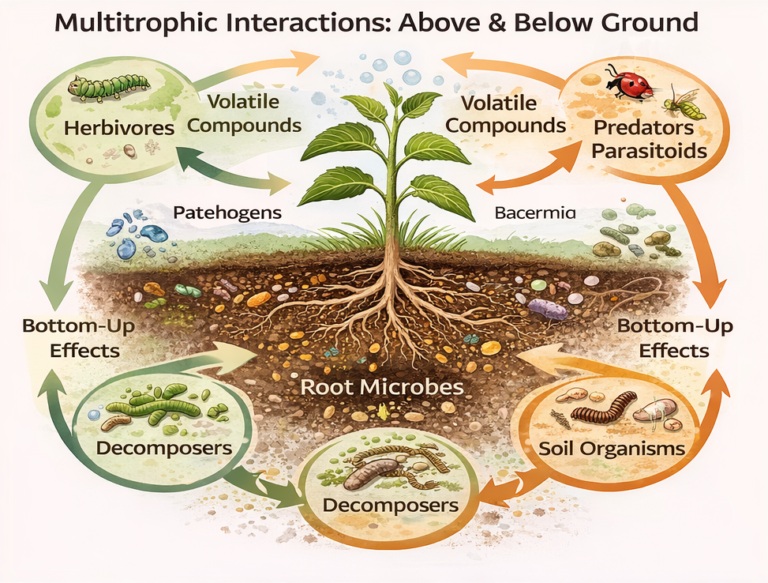
Plants don’t exist in isolation. They are part of a multitrophic system, interacting with:
Microbes (beneficial and harmful)
Herbivores
Predators and parasitoids
Soil organisms like decomposers
These interactions occur both above and below ground, forming a highly connected ecosystem known as the phytobiome.
Changes in one part of the system—like insect feeding on leaves—can ripple down to affect microbial communities in the soil, and vice versa.
Root Exudates: The Plant’s Secret Language
Plants actively shape their microbial environment through root exudates—a mixture of sugars, amino acids, and other compounds released into the soil.
These exudates:
Feed beneficial microbes
Suppress harmful organisms
Influence microbial community composition
Plants can allocate up to 5–21% of their photosynthetic carbon to these exudates, essentially “investing” in their microbial partners.
This creates a form of chemical communication, driving interactions that can either benefit or harm the plant.
Not All Microbes Are Created Equal
The rhizosphere is selective. Plants actively recruit certain microbes while excluding others.
This leads to:
Lower diversity than bulk soil
Highly specialized microbial communities
Strong plant–microbe co-evolution
Different plant species—and even different varieties—host distinct microbial communities, highlighting the importance of genetics in shaping the microbiome.
The Power of Disease-Suppressive Soils
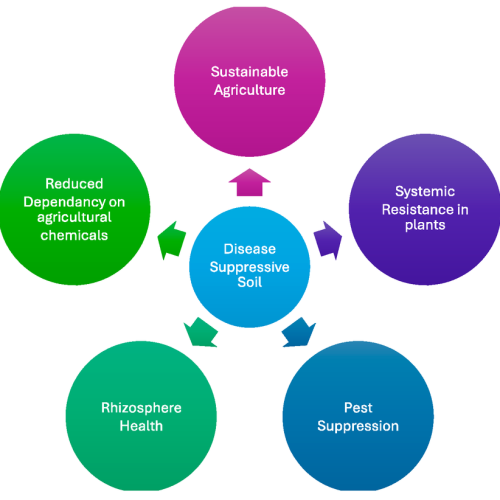
One of the most exciting aspects of the rhizosphere microbiome is its ability to protect plants from disease.
There are two main types of disease suppression:
General Suppression
Driven by the overall microbial biomass
Not transferable between soils
Specific Suppression
Caused by particular beneficial microbes
Can be transferred to other soils
In these systems, microbes:
Compete with pathogens
Produce antibiotics
Trigger plant immune responses
Plants can even recruit beneficial microbes when under attack, effectively calling in reinforcements.
Microbial Allies: Nature’s Biocontrol Agents
Certain microbes actively promote plant growth and protect against disease.
Plant Growth-Promoting Rhizobacteria (PGPR)
These bacteria:
Improve nutrient uptake
Enhance soil quality
Suppress pathogens
Plant Growth-Promoting Fungi (PGPF)
Fungi like Trichoderma:
Attack harmful fungi (mycoparasitism)
Produce enzymes and antibiotics
Trigger plant defense systems
These organisms are increasingly used in sustainable agriculture as biological alternatives to chemicals.
Mycorrhizae: The Underground Network
Mycorrhizal fungi form symbiotic relationships with plant roots, extending their reach into the soil.
They:
Improve nutrient uptake (especially phosphorus)
Enhance plant growth
Increase resistance to pests and diseases
These fungi also shape microbial communities, creating a specialized zone known as the mycorrhizosphere.
Multitrophic Interactions: A Delicate Balance
The rhizosphere microbiome doesn’t just affect roots—it influences the entire ecosystem.
For example:
Soil microbes can alter plant signals that attract beneficial insects
Aboveground herbivory can change root exudates
Microbial activity can influence pest populations
These top-down and bottom-up effects highlight the interconnectedness of life in agricultural systems.
Plant-Soil Feedback: The Legacy Effect
Plants don’t just respond to soil—they change it.
Through microbial interactions, plants leave behind a biological legacy that affects future plant growth. This is known as plant-soil feedback (PSF).
Depending on the microbes present, this can:
Enhance growth
Suppress competitors
Increase disease risk
Allelopathy: Microbes as Mediators
Some plants release chemicals that inhibit the growth of neighboring plants—a phenomenon known as allelopathy.
Microbes play a key role by:
Breaking down or modifying these chemicals
Enhancing or reducing their effects
Protecting plants from toxicity
This makes microbes critical players in:
Weed suppression
Crop competition
Sustainable farming practices
Toward Sustainable Agriculture
With global soil health declining and climate change intensifying agricultural challenges, understanding the rhizosphere microbiome is more important than ever.
Future farming will rely on:
Harnessing beneficial microbes
Designing disease-suppressive soils
Using metagenomics to understand microbial communities
Managing ecosystems rather than just inputs
Final Thoughts
The rhizosphere microbiome is not just a supporting player—it’s a central driver of plant health and ecosystem function.
By learning how to work with these microscopic allies, we can:
Improve crop productivity
Reduce chemical inputs
Build more resilient agricultural systems
The future of farming lies not just above the ground—but in the invisible world below it.