Dangerous Microbes Hiding in Plain Sight:
Everyday Objects That Can Make You Sick
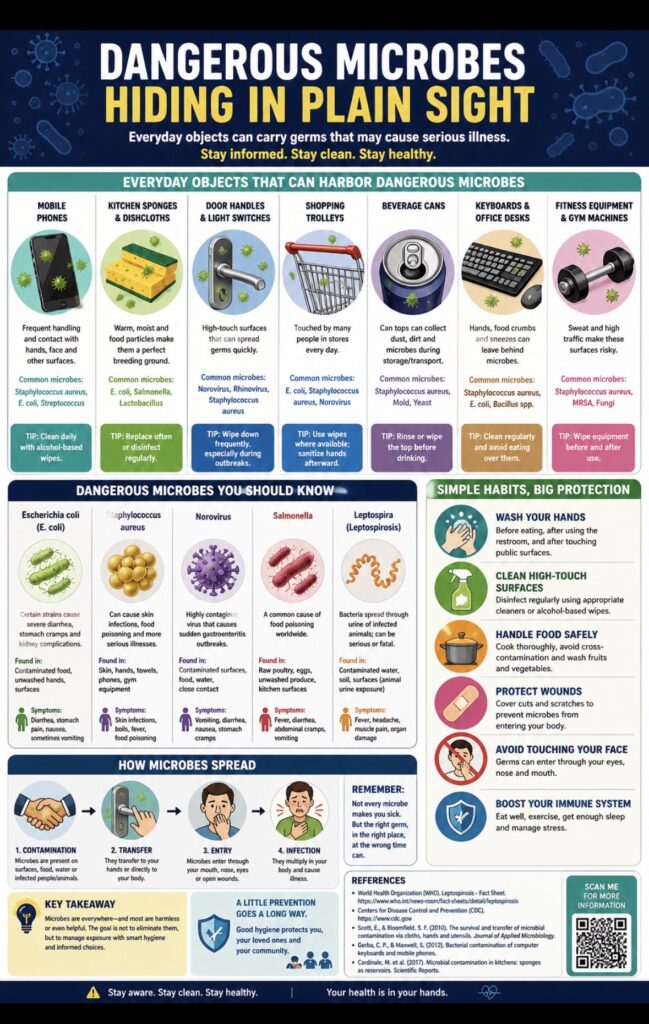
We tend to associate dangerous microbes with hospitals, polluted water, or spoiled food. Yet many of the organisms capable of causing illness are quietly present on objects we touch every day—phones, door handles, kitchen cloths, and even the rim of a drink can. Most of the time, our immune systems and basic hygiene keep us safe. But under the right conditions, these everyday encounters can turn into real health risks.
This article explores where these microbes live, how they spread, and what you can realistically do to reduce your exposure—without becoming obsessive about cleanliness
1. The Usual Suspects: Microbes Worth Knowing
🦠 Escherichia coli (E. coli)
- Where it’s found: Raw food, contaminated surfaces, unwashed hands
- Risk: Certain strains can cause severe diarrhea and kidney complications
- How it spreads: Poor hand hygiene, cross-contamination in kitchens
🦠 Staphylococcus aureus
- Where it’s found: Skin, gym equipment, towels, phones
- Risk: Skin infections; some strains (like MRSA) are antibiotic-resistant
- How it spreads: Direct contact with contaminated surfaces or skin
🦠 Norovirus
- Where it’s found: Door handles, shared surfaces, food prep areas
- Risk: Intense vomiting and diarrhea outbreaks
- How it spreads: Extremely contagious—even tiny amounts can infect
🦠 Salmonella
- Where it’s found: Raw poultry, eggs, kitchen counters
- Risk: Food poisoning, fever, diarrhea
- How it spreads: Cross-contamination and improper food handling
🦠 Leptospirosis
- Where it’s found: Water or surfaces contaminated with animal urine
- Risk: Fever, organ damage, potentially fatal complications
- How it spreads: Through cuts, mucous membranes, or ingestion
2. Everyday Objects That Harbor Microbes
📱 Mobile Phones
Your phone travels everywhere—bathrooms, kitchens, public transport. Studies consistently show that phones can carry more bacteria than toilet seats, including skin and fecal microbes.
Tip: Clean regularly with alcohol-based wipes.
🧽 Kitchen Sponges & Dishcloths
These are among the most microbially dense objects in the home due to moisture and food residue.
Common microbes: E. coli, Salmonella
Tip: Replace often or disinfect (microwave when damp or use boiling water).
🚪 Door Handles & Light Switches
High-touch surfaces in homes, offices, and public spaces accumulate microbes rapidly.
Tip: Regular disinfection—especially during illness outbreaks.
🛒 Shopping Trolleys & Shared Equipment
Handles can carry pathogens from many users.
Tip: Use wipes where available; sanitize hands afterward.
🥤 Beverage Cans
Stored in warehouses and transported in bulk, can tops may accumulate dust, dirt, or microbes.
Reality check: While contamination is possible, serious infections from can rims are rare.
Tip: Rinse or wipe if visibly dirty—simple and effective.
💻 Keyboards & Office Desks
Often overlooked, these can harbor bacteria from hands, sneezing, and food.
Tip: Clean periodically and avoid eating over them.
3. Why These Microbes Matter
Microbial exposure is normal and often harmless—in fact, it helps train the immune system. Problems arise when:
- Pathogens are present in high numbers
- They enter the body via mouth, eyes, or wounds
- The person is immunocompromised
Not every germ leads to illness—but the right germ in the right place at the wrong time can.
4. Practical Hygiene Without Paranoia
You don’t need to sterilize your life. Focus on high-impact habits:
- Wash hands before eating or touching your face
- Clean high-touch surfaces regularly
- Handle food safely (separate raw and cooked items)
- Cover cuts and wounds
- Avoid touching your face unnecessarily
These simple steps dramatically reduce risk.
5. The Bigger Picture
Microbes are everywhere—and most are harmless or beneficial. The goal isn’t to eliminate them, but to manage exposure intelligently. Awareness of how infections actually spread helps separate real risks from viral myths and exaggerated warnings.