A cruiseship the MV Hondius has been at the centre of an international health scare since Saturday (2 May 2026), when the World Health Organisation (WHO) was informed that a rare disease caused by the Hantavirus – usually spread from infected rodents typically through urine, droppings and saliva – was suspected of being behind the deaths of three of its passengers. As others fell ill, passengers and crew have been in isolation after Cape Verde authorities barred the ship from docking. The ship is anchored just off the island nation’s capital, Praia. The Dutch operator Oceanwide Expeditions indicated on Tuesday (4/05) that a solution was in sight, with plans to evacuate two sick crew members to the Netherlands for “urgent medical care”, along with a third person who had been in close contact with a German passenger who died on Saturday.
In recent years, the world has become increasingly aware of zoonotic diseases — infections that spread from animals to humans. From Ebola and avian influenza to COVID-19, these diseases remind us that human health, animal health, and environmental health are deeply connected. One virus currently receiving renewed media attention is Hantavirus, a group of viruses carried primarily by rodents. Although relatively rare compared with many other infectious diseases, hantavirus infections can be severe and sometimes fatal, making public awareness extremely important.
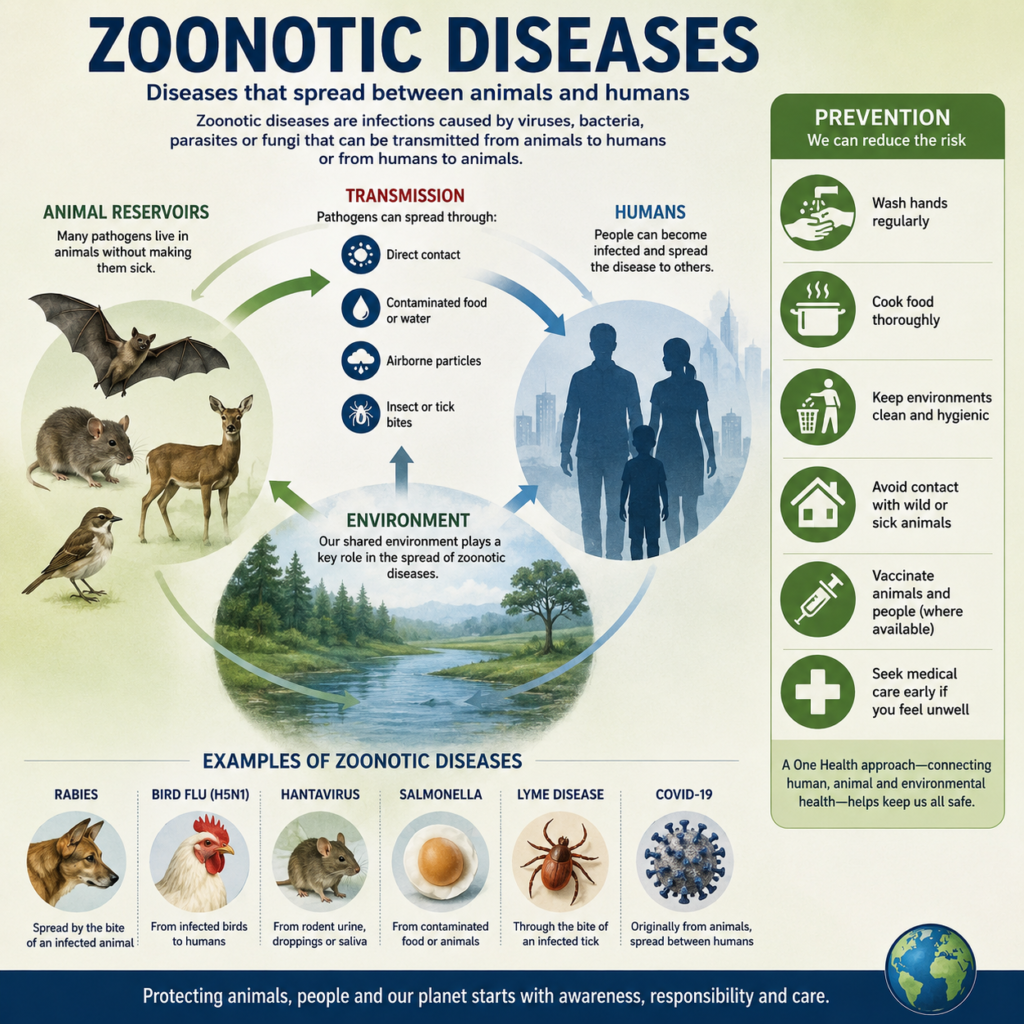
Zoonotic diseases are infections caused by bacteria, viruses, fungi, or parasites that can jump from animals to humans. Scientists estimate that more than 60% of emerging infectious diseases in humans originate in animals.
Examples include:
- Rabies from infected mammals
- Bird flu from poultry
- Plague from rodents and fleas
- Ebola from wildlife reservoirs
- COVID-19, believed to have originated from animal spillover
- Hantavirus from rodents
Human expansion into wildlife habitats, climate change, intensive farming, and global travel all increase opportunities for pathogens to cross species barriers.
What Is Hantavirus?
Hantavirus Pulmonary Syndrome (HPS) is a severe respiratory disease caused by hantaviruses, while other hantavirus strains can cause hemorrhagic fever with renal syndrome (HFRS), particularly in Europe and Asia. The virus is most commonly carried by rodents such as:
- Deer mice
- Cotton rats
- Rice rats
- White-footed mice
Importantly, infected rodents usually do not appear sick, allowing the virus to circulate silently in nature. Humans can become infected when they inhale tiny virus-containing particles from:
- Rodent urine
- Droppings
- Saliva
- Dust contaminated with rodent waste
This often occurs when cleaning:
- Garages
- Sheds
- Cabins
- Storage rooms
- Farms
- Long-unused building
Media attention often rises when clusters of cases occur or when deaths linked to hantavirus are reported, such as currently on the MV Hondius. Although hantavirus infections remain uncommon in many parts of the world, the disease attracts concern because:
- Symptoms can progress rapidly
- Severe lung complications may develop
- Mortality rates can be high in some cases
- There is no specific cure for many hantavirus infections
Public concern also increases because rodents are widespread and frequently live close to humans.
Symptoms of Hantavirus Infection
Early symptoms may resemble flu-like illnesses, making diagnosis difficult at first.
Early Symptoms
- Fever
- Fatigue
- Muscle aches
- Headaches
- Chills
- Nausea or vomiting
Severe Symptoms
As the disease progresses, some patients develop:
- Shortness of breath
- Fluid accumulation in the lungs
- Low blood pressure
- Respiratory failure
In severe cases, intensive medical care and ventilatory support may be required.
How Dangerous Is It?
Hantavirus infections can be serious, but they are still considered relatively rare. The risk to the general public remains low if proper hygiene and rodent control measures are followed. The greatest risk occurs in:
- Rural environments
- Areas with heavy rodent infestations
- Poorly ventilated buildings
- Occupations involving exposure to rodent habitats
Farmers, campers, forestry workers, cleaners, and people entering abandoned buildings may face increased exposure risk.
Key Safety Measures
1. Control Rodents
- Seal holes and gaps in buildings
- Store food securely
- Remove rodent nesting materials
- Use traps where necessary
2. Clean Safely
Never sweep or vacuum dry rodent droppings because this can aerosolize infectious particles.
Instead:
- Ventilate the room first
- Wear gloves
- Spray contaminated areas with disinfectant
- Wipe surfaces with disposable towels
3. Protect High-Risk Areas
Use masks and protective equipment when cleaning:
- Barns
- Sheds
- Cabins
- Grain storage facilities
4. Reduce Environmental Exposure
Keeping living and working areas clean reduces rodent attraction and nesting opportunities.
The Bigger Picture: One Health
Hantavirus highlights an important scientific principle called One Health — the idea that human health is interconnected with animal and environmental health. One Health approaches encourage collaboration among:
- Doctors
- Veterinarians
- Ecologists
- Microbiologists
- Public health officials
Monitoring wildlife diseases helps scientists identify potential threats before they become widespread outbreaks.
Microbes at the Human–Wildlife Interface
Viruses like Hantavirus remind us that microbes are constantly moving through ecosystems. Most never affect humans, but under the right conditions, some gain opportunities to “spill over” into people. Urbanization, climate shifts, and habitat disruption can increase human contact with wildlife reservoirs, creating new opportunities for zoonotic diseases to emerge. This is why surveillance, scientific research, and public education remain essential tools in protecting global health.
Final Thoughts
Hantavirus is not a new virus, but renewed media attention has suddenly highlighted the ongoing importance of zoonotic diseases in our interconnected world. While infections remain uncommon, awareness and prevention are critical.
Simple precautions — especially rodent control and safe cleaning practices — can significantly reduce risk.
More broadly, hantavirus serves as another reminder that the health of humans, animals, and the environment cannot be separated.
Understanding that connection may be one of the most important lessons modern microbiology has taught us.