
Can Microbes Really Replace Chemical Fertilisers?
Modern agriculture faces a difficult balancing act: producing enough food while reducing environmental damage, improving soil health, and lowering input costs. One of the most promising tools in sustainable farming is the use of biofertilisers — living microorganisms that help plants access nutrients naturally. Biofertilisers are increasingly being adopted in organic farming, regenerative agriculture, and even conventional crop systems. But how effective are they really? Can they compete with synthetic fertilisers? And under what conditions do they work best?
What Are Biofertilisers?
Biofertilisers are preparations containing beneficial microorganisms that enhance nutrient availability and stimulate plant growth. Unlike chemical fertilisers, which directly add nutrients to the soil, biofertilisers work biologically by improving natural nutrient cycling.
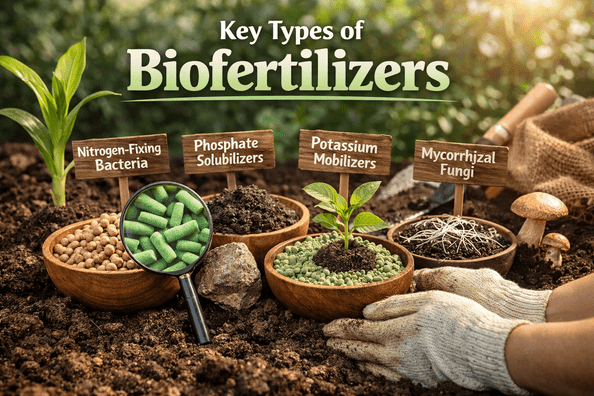
Common groups of biofertilisers include:
Nitrogen-fixing bacteria
These microbes convert atmospheric nitrogen into forms plants can use.
Examples include:
- Rhizobium (associated with legumes)
- Azotobacter
- Azospirillum
Phosphate-solubilising microorganisms
Large amounts of phosphorus in soil are chemically locked and unavailable to plants. Certain bacteria and fungi release organic acids that make phosphorus accessible.
Examples:
- Bacillus
- Pseudomonas
- Aspergillus
Mycorrhizal fungi
These fungi form symbiotic relationships with plant roots, extending their effective root system and improving uptake of water and nutrients, especially phosphorus.
Plant-growth-promoting rhizobacteria (PGPR)
These organisms stimulate plant growth through hormone production, disease suppression, and enhanced nutrient uptake.
How Do Biofertilisers Work?
Biofertilisers improve plant productivity through several mechanisms:
- Nitrogen fixation
- Phosphate solubilisation
- Production of plant hormones such as auxins and gibberellins
- Improved root development
- Enhanced soil microbial diversity
- Suppression of soil-borne pathogens
- Improved drought tolerance
The result is often healthier plants with stronger root systems and improved resilience to environmental stress.
The Science Behind Their Efficacy
The efficacy of biofertilisers varies widely depending on:
- Soil type
- Climate
- Crop species
- Existing soil microbiome
- Farming practices
- Formulation quality
Under ideal conditions, biofertilisers can significantly improve crop yields. Studies have reported:
- Yield increases ranging from 10–30%
- Reduced dependence on synthetic fertilisers
- Improved nutrient use efficiency
- Better soil structure and organic matter accumulation over time
However, results are not always consistent. Unlike synthetic fertilisers, which produce relatively predictable responses, biofertilisers depend on living organisms surviving and functioning in the soil environment. Temperature, moisture, pH, salinity, and pesticide use can all affect microbial survival.
Nitrogen-Fixing Biofertilisers: A Proven Success
Among all biofertilisers, nitrogen-fixing inoculants are perhaps the most successful commercially. Legume crops such as soybeans, peas, and beans benefit enormously from inoculation with Rhizobium species. In many systems, properly inoculated legumes require little or no additional nitrogen fertiliser. This biological nitrogen fixation plays a critical role in sustainable agriculture worldwide.
Mycorrhizal Fungi: Underground Networks
Mycorrhizal fungi have attracted enormous scientific interest because they effectively expand the root system of plants.
Benefits include:
- Enhanced phosphorus uptake
- Improved drought resistance
- Better soil aggregation
- Increased tolerance to stress
These fungi are especially valuable in degraded or nutrient-poor soils. Interestingly, intensive tillage and excessive chemical fertiliser use may reduce natural mycorrhizal populations, making inoculation more attractive in some agricultural systems.
Why Results Can Be Inconsistent
One of the biggest criticisms of biofertilisers is variability. A product that performs exceptionally well in one field may fail in another.
Reasons include:
Competition with native microbes: Introduced microorganisms must compete with established soil microbial communities.
Poor formulation or storage: Because biofertilisers contain living organisms, shelf life and storage conditions are critical.
Environmental stress: Drought, heat, acidity, or salinity may reduce microbial survival.
Incorrect application: Timing and placement matter enormously. Some inoculants must be applied directly to seeds or roots.
Overreliance on microbial products: Biofertilisers are not miracle cures. Poor soils lacking organic matter may still require integrated nutrient management.
Biofertilisers vs Chemical Fertilisers
Biofertilisers should not necessarily be viewed as direct replacements for synthetic fertilisers. In many cases, the best results come from integrated systems combining:
- Reduced chemical fertiliser inputs
- Organic matter additions
- Crop rotation
- Microbial inoculants
This integrated approach can:
- Improve nutrient efficiency
- Reduce fertiliser runoff
- Lower production costs
- Enhance long-term soil health
Biofertilisers offer several important environmental advantages:
Reduced nutrient pollution: Synthetic fertilisers often leach into rivers and groundwater, contributing to eutrophication.
Lower greenhouse gas emissions: Nitrogen fertiliser production is energy intensive and contributes substantially to carbon emissions.
Improved soil biodiversity: Healthy microbial ecosystems support long-term soil fertility.
Better soil structure: Microbial activity helps build stable soil aggregates and improve water retention.
Challenges Facing the Industry
Despite their promise, biofertilisers still face obstacles:
- Short shelf life
- Variable field performance
- Regulatory inconsistencies
- Farmer skepticism
- Limited awareness
- Quality-control issues in some markets
Research is now focusing on developing:
- More robust microbial strains
- Multi-species inoculants
- Encapsulation technologies
- Region-specific formulations
- Precision microbiome engineering
The Future of Biofertilisers
Advances in microbiome science are rapidly transforming agriculture.
Scientists increasingly recognise that soil is not merely a growth medium but a complex living ecosystem. Future farming may rely heavily on engineered microbial communities tailored to specific crops and environments.
Emerging technologies include:
- Synthetic microbial consortia
- AI-assisted microbiome analysis
- Seed microbiome engineering
- Biofertilisers combined with biopesticides
- Climate-resilient microbial inoculants
As fertiliser prices rise and environmental pressures intensify, biofertilisers are likely to become an increasingly important component of global agriculture.
Final Thoughts
Biofertilisers are not magic bullets, but they are powerful biological tools with enormous potential. Their efficacy depends heavily on environmental conditions, proper application, and integration into broader soil-management strategies.
When used correctly, biofertilisers can:
- Improve crop productivity
- Reduce chemical fertiliser dependence
- Enhance soil health
- Support sustainable agriculture
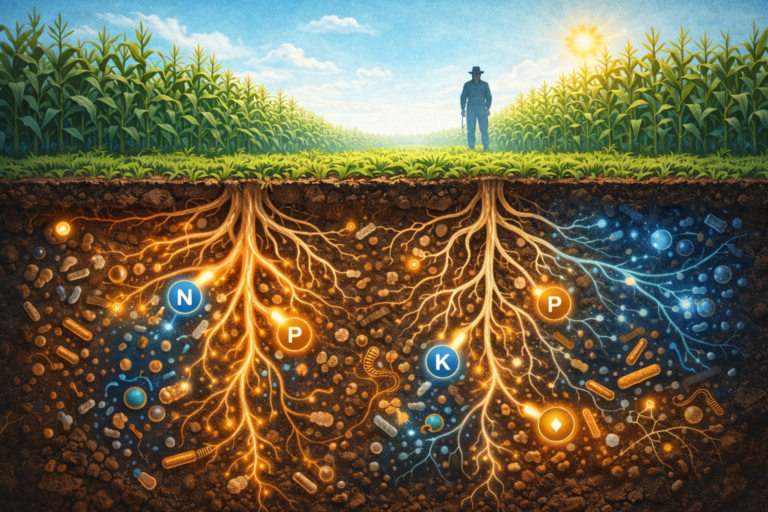
The future of farming may depend less on feeding plants directly and more on managing the invisible microbial ecosystems beneath our feet.
Very informative. Thank you!
Thanks!
Very nice. Well written. Excellent information thanks