How Microbes Could Help Build a Healthier Planet
When we think about agriculture and food, we usually picture fields, crops, livestock, oceans, factories, supermarkets and finally the food on our plates. But there is another world operating throughout this entire journey — a microscopic world of bacteria, fungi, archaea, viruses and other microorganisms. These microbes are not simply passengers. They are active participants. They help plants grow, influence animal health, affect the quality and shelf life of food, shape aquatic ecosystems and ultimately interact with the microbial communities living inside our own bodies.
A fascinating 2025 review published in Frontiers in Science suggests that understanding these connections could become an important part of creating more sustainable food systems and healthier people.
SOURCE
Fernández-Gómez, P., Leong, D., Berg, G. et al. (2025). Harnessing agri-food system microbiomes for sustainability and human health. Frontiers in Science, 3, 1575468. DOI: 10.3389/fsci.2025.1575468.
The food system is really a microbial system
Imagine following a tomato from its beginning in the soil to the moment it reaches your gut. Its story starts underground. The roots of the tomato plant interact with an enormous community of microorganisms in the soil. Some microbes help make nutrients available to the plant, while others can protect it from disease or help it tolerate drought, salinity and other environmental stresses. The plant then develops its own microbial community around its roots, leaves and other tissues. When the tomato is harvested, some of those microorganisms may travel with it.
Processing, washing, storage and transportation can change this microbial community. Eventually, the tomato is eaten — and some of the compounds and microorganisms associated with the food can interact with the microbes living in the human gut.
The journey from soil to stomach is therefore also a journey through interconnected microbiomes.
The researchers in the article cited above describe these relationships as part of a much larger network linking soil, plants, animals, water, food processing and the human gastrointestinal tract.
What exactly is a microbiome?
A microbiome is much more than a collection of microbes. It is a community of microorganisms living together within a particular environment, together with their interactions and activities.
Think of a microbiome as a microscopic ecosystem. Just as a forest contains trees, insects, birds, fungi and countless other organisms interacting with one another, soil contains its own microscopic community. So do plant roots, leaves, the rumens of cattle, fish, fermented food, and, of course, the human gut. These microbial ecosystems are constantly changing in response to their environment. They communicate, compete, cooperate and exchange molecules and sometimes genetic information.
This means that changing one part of the system can potentially influence another.
Healthy soil means healthier plants
One of the most exciting possibilities is the use of microbiomes to improve agriculture. Plants do not grow alone. Their roots are surrounded by the rhizosphere — a biologically active zone where plant roots and soil microorganisms interact intensely.
Some microorganisms can help plants obtain nutrients such as nitrogen and phosphorus. Others can help plants tolerate drought, salinity, temperature extremes or contaminated soils. Researchers are now exploring whether beneficial microbial communities can deliberately be introduced or encouraged in agricultural soils. For example, microbial consortia have been investigated for their ability to:
improve nitrogen fixation;
make phosphorus more available;
protect plants against pathogens;
improve crop resilience to drought;
increase tolerance to salinity; and
maintain crop productivity under environmental stress.
This could eventually reduce our dependence on some conventional agricultural inputs. But there is an important lesson here:
We should not simply replace one chemical input with one microbial product. The real goal is to understand the microbial ecosystem and work with it.
Plant have a microbiome too
We often talk about plants as individual organisms. Microbiome science tells us that this is only part of the story. A plant exists in partnership with communities of microorganisms living around and within it. The plant provides microorganisms with nutrients and habitats. In return, some of those microorganisms can influence plant nutrition, growth and resistance to environmental stress. This relationship can be particularly important when conditions become difficult. Drought, flooding, salinity, extreme temperatures and poor soils can all challenge crops. Some plants naturally recruit microorganisms that help them cope with these stresses. Scientists are now investigating whether these natural relationships can be understood and used to make agriculture more resilient.
In other words:
The future of crop improvement may involve not only improving the plant — but also improving the microbial community associated with the plant.
Microbes can influence livestock — and the climate
The microbial story continues when we move from plants to animals. A cow’s digestive system contains an enormous microbial ecosystem, particularly in the rumen. These microorganisms help break down plant material that the animal itself cannot digest efficiently. But there is a complication. Some rumen microorganisms, particularly methane-producing archaea, contribute to the production of methane during digestion. Methane is a powerful greenhouse gas. Researchers are therefore investigating how changes in animal diets and rumen microbiomes could improve feed efficiency while potentially reducing methane emissions. This illustrates something important:
Microbiology can connect agricultural productivity directly with climate change.
The ocean has microbiomes too
Microbiomes aren’t confined to farms. Marine ecosystems are also dominated by microorganisms. In aquaculture, for example, the microbial communities associated with fish can influence health, growth and disease susceptibility. Researchers are exploring whether monitoring microbial communities on fish skin, gills and in the surrounding water can provide early warnings about changes in fish health. The same principle is being investigated in marine conservation. Coral reefs, for example, depend on intimate relationships between corals and microorganisms. Changes in environmental conditions can disrupt these relationships. Understanding the coral microbiome may therefore provide new opportunities for protecting or restoring damaged marine ecosystems.
Food has a microbiome
Food isn’t necessarily microbiologically “empty”. Fresh fruits and vegetables can carry microorganisms from the soil, plant surfaces, water and surrounding environment. What happens to these microorganisms after harvesting depends on washing, processing, packaging, refrigeration and storage? Modern food processing has brought enormous benefits, particularly by making food safer and extending shelf life. But these processes can also dramatically change the microbial communities associated with food.
The researchers in the cited article point out that between 25% and 50% of fruits and vegetables may be lost after harvest globally, making microbial control of spoilage an important sustainability challenge. Instead of relying exclusively on broad-spectrum methods to eliminate microorganisms, scientists are exploring more targeted approaches. One possibility is the use of beneficial microbes as biological control agents to suppress spoilage organisms. Successful examples have already been reported for crops such as strawberries and peaches.
Refrigerators are a microbial ecosystem
Microbiomes don’t disappear when food reaches your kitchen. Your refrigerator, chopping boards, countertops and hands all contain microbial communities. Microbiome-tracking technologies are increasingly allowing scientists to follow the movement of microorganisms through food-processing environments and even into household environments. This could help identify contamination routes and improve food safety.
It also reveals something fascinating:
Microbes are constantly moving between environments.
Soil → plant → food → kitchen → human.
The boundaries between ecosystems are much less rigid than we might imagine.
Viruses that control bacteria
The article also highlights a fascinating but often overlooked part of microbiomes: bacteriophages. Bacteriophages, or simply phages, are viruses that infect bacteria. They can act almost like microscopic predators. Some phages can reduce populations of harmful or spoilage bacteria, making them potentially useful tools for food safety. But phages can also cause problems. In fermented foods such as yoghurt and cheese, they may attack the beneficial bacteria responsible for fermentation. So even the viruses within a microbiome can influence whether a food-production process succeeds or fails.
This is a reminder that a microbiome is not simply “good bacteria”. It is a complex ecological network involving bacteria, fungi, archaea, viruses and their interactions.
The human gut
Eventually, the food system leads back to us. Our intestines contain one of the most complex microbial ecosystems known. And what we eat is one of the major factors influencing this community. Dietary fibre, fermentable carbohydrates, polyphenols and other compounds can provide substrates that influence gut microorganisms. Fermented foods can also introduce microorganisms and microbial metabolites into the diet.
The review highlights growing evidence that food and gut microbiomes are connected, while also stressing that food safety remains essential. This gives us an intriguing concept:
The food we eat doesn’t simply feed us. It also feeds our microbes. And those microbes can, in turn, influence how components of our diet are transformed inside the body.
The problem with modern food systems
Modern food systems have solved many enormous problems. Refrigeration, transportation, processing and preservation allow billions of people to access food throughout the year. But there can be trade-offs. Highly processed foods are often very different from the foods that originally came from farms. The review notes that diets high in refined carbohydrates, saturated fat and salt and low in fibre can be associated with reduced gut microbial diversity. At the same time, food processing must never be portrayed as simply “bad”. Food safety is critical. The challenge is to develop food systems that can provide safe, nutritious and affordable food while preserving beneficial microbial functions wherever possible.
From killing microbes to managing ecosystems
This may be the biggest change in thinking brought about by microbiome science. Traditional microbiology often asked: Which microorganism is causing the problem? Modern microbiome science increasingly asks: What is happening to the entire microbial community?
Instead of trying to eliminate every microorganism, we may sometimes be better served by managing microbial ecosystems. That could mean:
Protecting beneficial microbes.
Encouraging microbial diversity.
Introducing carefully selected microbial communities.
Using bacteriophages against specific unwanted bacteria.
Using probiotics and prebiotics strategically.
Changing agricultural practices to support healthy soil microbiomes.
Monitoring microbial communities before problems become visible.
This is a shift from microbial elimination to microbial management.
The technology making this possible
Much of this new understanding has been made possible by advances in what are called omics technologies. These include:
Metagenomics — looking at the genetic potential of an entire microbial community.
Metatranscriptomics — examining which genes are being expressed.
Metaproteomics — investigating the proteins being produced.
Metabolomics — studying the chemical compounds produced by biological systems.
Culturomics — using high-throughput approaches to grow and identify microorganisms.
Together, these technologies allow scientists to move beyond simply asking: “Which microbes are there?”
and begin asking: “What are they doing?”
That distinction is crucial. Knowing that a bacterium is present does not necessarily tell us what role it plays. The authors emphasise that microbiome research still needs experimental work to establish cause and effect rather than relying solely on predictions from sequencing data.
A new vision for sustainable agriculture
Imagine an agricultural system in which farmers routinely monitor the biological health of their soils. Imagine crops supported by carefully selected microbial communities that improve nutrient availability and drought tolerance. Imagine livestock diets designed partly around their rumen microbiomes. Imagine aquaculture systems monitored through microbial indicators before disease outbreaks occur. Imagine food-processing plants with microbial maps showing where contamination is likely to arise. Imagine targeted biological controls replacing some broad-spectrum chemical interventions. And imagine food systems designed not only to provide calories and nutrients, but also to interact positively with the microbial ecosystems inside us. These ideas are not all ready for widespread application. Some are still experimental. But they point towards a fascinating future.
One Health — one connected microbial world
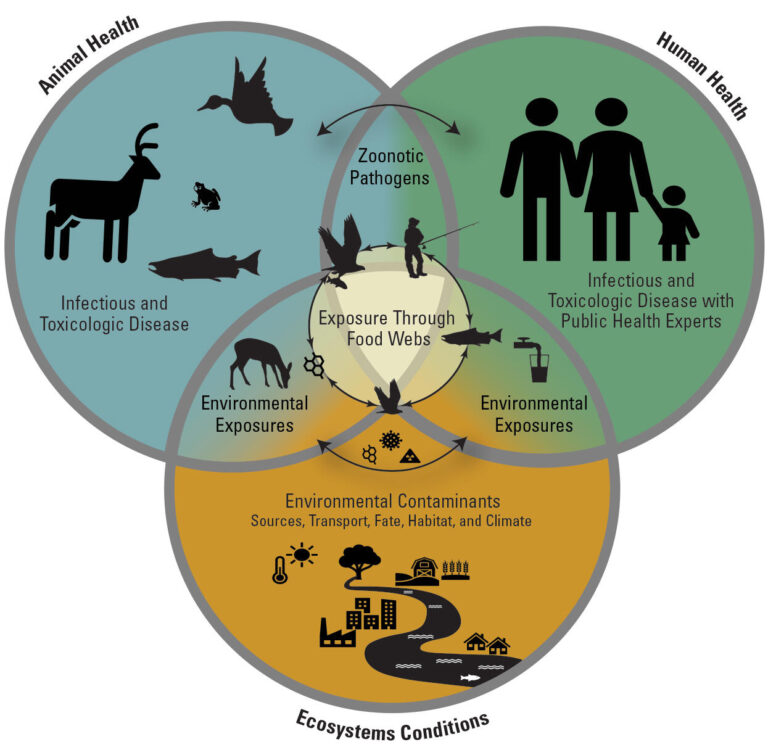
Perhaps the most important idea in this research is the concept of One Health. Human health, animal health and environmental health are often treated as separate subjects. Microbiomes demonstrate why they cannot really be separated.
Healthy soil contributes to healthy plants.
Healthy plants contribute to healthy food.
Healthy food influences animals and humans.
Animals influence soil and water.
Agriculture influences microbial ecosystems.
And human activities can alter all of them.
The connections form a continuous web. We are not living in a world surrounded by microbes. We are living in a world made up of microbial ecosystems.
The microbial revolution has only just begun
The greatest promise of microbiome science may not be the discovery of one “super microbe”. It may be learning how entire microbial communities function together. The future could be about designing healthier microbial ecosystems rather than simply searching for individual microorganisms with useful properties. But the researchers also caution that much remains unknown. We need better experimental methods, standards, regulation and collaboration between scientists, farmers, food producers, industry, policymakers and consumers before microbiome technologies can reach their full potential.
The message is both exciting and humbling: We have only begun to understand the invisible biological networks that sustain our food system.
And perhaps the most important lesson is this: If we want to build a healthier planet, we may first need to learn how to work with the microbes that already make it possible.
Conclusions
Microbes are not merely the organisms that cause disease or make food spoil.
They are fundamental players in agriculture, food production, animal health, marine ecosystems, climate processes and human health. The soil beneath our feet, the plants in our gardens, the food on our plates and the microbes in our gut are all parts of a much larger microbial network.
Protect the microbiome, and we may be protecting the systems that sustain us.