

INTRODUCTION
Climate change presents unprecedented challenges to global agriculture, ecosystem resilience, and food security. While much attention has focused on reducing greenhouse gas emissions through technological innovation, plant-associated microbial communities offer an underutilised nature-based solution capable of simultaneously enhancing carbon sequestration, improving soil health, increasing crop resilience, and reducing dependence on synthetic agricultural inputs.
Plant microbiomes—including rhizosphere, endosphere, phyllosphere, and spermosphere communities—play central roles in nutrient cycling, stress tolerance, disease suppression, and ecosystem functioning. This blog examines the mechanisms by which beneficial microorganisms contribute to climate change mitigation through enhanced soil carbon storage, biological nitrogen fixation, improved water-use efficiency, restoration of degraded ecosystems, and sustainable agricultural intensification.
Particular emphasis is placed on drought-adapted crops such as cactus pear (Opuntia spp.), whose unique physiology and associated microbiomes provide exceptional opportunities for climate-smart agriculture in arid and semi-arid environments. Advances in metagenomics, synthetic microbial communities, microbiome engineering, and precision agriculture are discussed as emerging technologies for improving crop performance under future climatic conditions.
Integrating microbiome science into agricultural management represents one of the most promising biological approaches for achieving both climate mitigation and climate adaptation.
Keywords: Plant microbiome, climate change, carbon sequestration, rhizosphere, sustainable agriculture, Opuntia, cactus pear, biological nitrogen fixation, soil health, climate-smart agriculture
Understanding the Plant Microbiome
Plants host microbial communities in several distinct habitats:
- Rhizosphere: the soil immediately surrounding roots.
- Endosphere: microorganisms living inside plant tissues.
- Phyllosphere: microbes inhabiting leaves and stems.
- Spermosphere: microbial communities associated with seeds.
These microorganisms are not passive inhabitants. They actively regulate plant growth, nutrient acquisition, disease resistance, and responses to environmental stress.
Climate Change and Agriculture
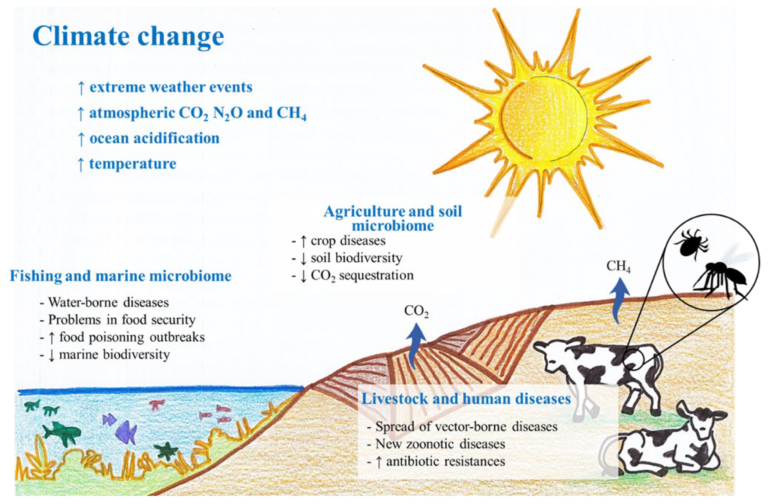
Agriculture contributes approximately one-quarter of global greenhouse gas emissions through:
- Nitrous oxide released from nitrogen fertilizers
- Methane from livestock and rice cultivation
- Carbon dioxide from soil degradation and land-use change
At the same time, agriculture is among the sectors most vulnerable to climate change. Higher temperatures, prolonged droughts, floods, salinity, and emerging diseases reduce crop yields and threaten food production. Plant microbiomes offer opportunities to address both sides of this challenge.
Enhancing Carbon Sequestration
One of the most important ecosystem services provided by plant-associated microbes is their contribution to carbon sequestration.
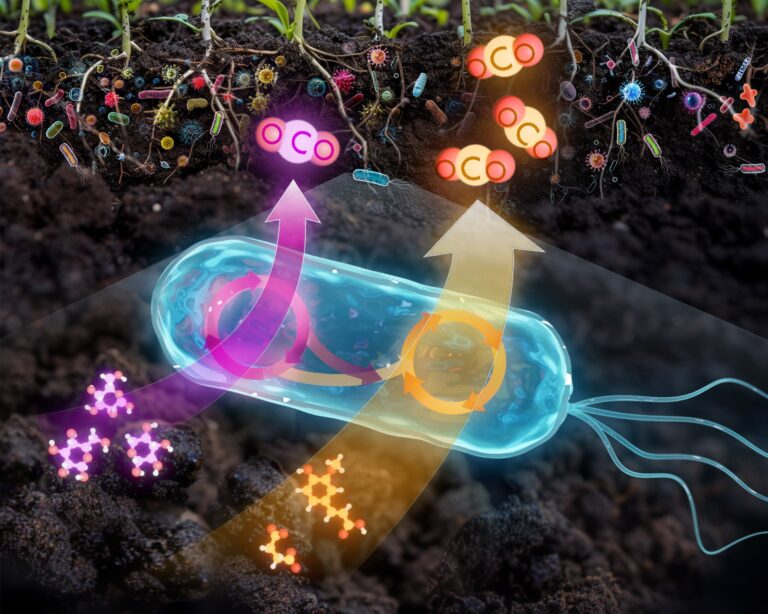
Photosynthesis captures atmospheric CO₂, converting it into plant biomass. A significant proportion of this carbon is transferred below ground through root exudates that feed soil microorganisms. These microbes transform organic carbon into stable soil organic matter, allowing carbon to remain stored in soils for decades or even centuries.
Certain fungal groups, particularly arbuscular mycorrhizal fungi, produce compounds such as glomalin that improve soil aggregation and physically protect carbon from decomposition. Healthy microbial communities therefore increase both the quantity and stability of soil carbon.
Reducing Dependence on Synthetic Fertilizers
Synthetic nitrogen fertilizers are major contributors to greenhouse gas emissions because their production requires large amounts of fossil energy and their application releases nitrous oxide (N₂O), a greenhouse gas approximately 270 times more potent than CO₂ over a 100-year period.
Beneficial microorganisms can substantially reduce fertilizer requirements by:
- Fixing atmospheric nitrogen
- Solubilizing phosphorus
- Mobilizing potassium and micronutrients
- Recycling organic nutrients
Examples include species of Rhizobium, Azospirillum, Azotobacter, Bacillus, and Pseudomonas. Greater reliance on these biological processes can significantly lower agriculture’s greenhouse gas footprint.
Improving Soil Health
Healthy soils are among the world’s largest terrestrial carbon reservoirs.
Microbial communities contribute to soil health by:
- Decomposing organic matter
- Recycling nutrients
- Forming stable soil aggregates
- Increasing soil porosity
- Enhancing water infiltration
- Reducing erosion
- Supporting biodiversity
Healthy soils store more carbon while becoming more resilient to extreme weather events.
Protecting Plants Against Disease
Climate change is expected to alter the distribution and severity of plant diseases.
Beneficial microbes protect plants through:
- Competition with pathogens
- Production of antimicrobial compounds
- Induction of systemic resistance
- Occupying infection sites
- Enhancing overall plant immunity
Reduced disease pressure decreases dependence on chemical pesticides, lowering both environmental impacts and agricultural production costs.
Restoring Degraded Ecosystems
Microbiome-assisted restoration is becoming an important tool in ecosystem rehabilitation.
Beneficial microorganisms can accelerate:
- Revegetation of degraded lands
- Recovery of mine tailings
- Restoration of rangelands
- Rehabilitation of saline soils
- Stabilisation of desertifying landscapes
By improving plant establishment and soil quality, microbial inoculants support long-term ecosystem recovery and carbon storage.
The Special Role of Arid-Land Plants
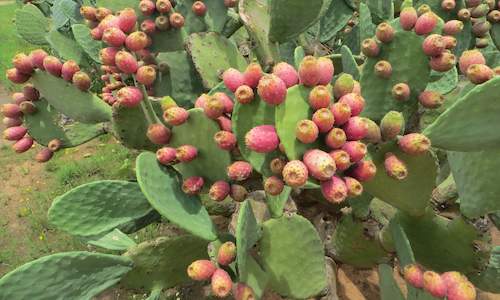
Plants adapted to arid environments, including cactus pear (Opuntia species), provide valuable opportunities for climate-smart agriculture. Cactus pear thrives under extreme drought conditions while producing substantial biomass with minimal water. Its microbiome includes drought-adapted bacteria and fungi capable of:
- Improving water-use efficiency
- Enhancing nutrient acquisition
- Increasing resistance to heat stress
- Promoting soil carbon accumulation
- Supporting sustainable production on marginal land
Because cactus pear can be cultivated where conventional crops struggle, integrating its beneficial microbiome into agricultural systems may contribute significantly to climate adaptation and carbon sequestration, particularly in semi-arid regions such as southern Africa.
Emerging Technologies
Rapid advances in microbiome science are enabling researchers to identify microbial communities that maximise plant performance under changing climates.
Promising technologies include:
- Metagenomics
- Metatranscriptomics
- Metabolomics
- Synthetic microbial communities
- Precision microbial inoculants
- Microbiome engineering
- Artificial intelligence-assisted microbial selection
These approaches are transforming beneficial microorganisms into a new generation of biological climate solutions.
Challenges
Despite considerable promise, several challenges remain:
- Microbial inoculants often perform inconsistently under field conditions.
- Soil type and climate strongly influence microbial survival.
- Native microbial communities may outcompete introduced strains.
- Regulatory approval processes differ between countries.
- Long-term ecological impacts require further investigation.
Addressing these challenges will require multidisciplinary collaboration among microbiologists, plant scientists, soil scientists, ecologists, agronomists, and policymakers.
Future Perspectives
The future of climate-smart agriculture will likely depend on managing entire plant microbiomes rather than individual microbial species. Advances in systems biology and ecological engineering are moving agriculture toward integrated microbiome management, where crop varieties, soil health, and beneficial microorganisms function together as a resilient biological system. Investment in microbiome research offers the dual benefits of improving food security while contributing to global climate mitigation goals.
Conclusions
Plant microbiomes represent one of nature’s most effective yet underutilised climate solutions. By enhancing carbon sequestration, improving soil health, reducing fertilizer use, increasing drought tolerance, and supporting sustainable agriculture, beneficial microorganisms can help transform agriculture from a significant source of greenhouse gases into part of the solution.
As climate pressures intensify, integrating microbiome science into agricultural practice offers a pathway toward resilient food production systems that benefit farmers, ecosystems, and future generations.