When we think about feeding plants, we usually picture fertilizers, compost, or watering cans. But beneath every healthy garden and thriving crop lies an invisible workforce that has been feeding plants for millions of years: microbes. These microscopic organisms—bacteria, fungi, archaea, and other tiny life forms—are the unsung heroes of agriculture and natural ecosystems. Without them, plants would struggle to obtain the nutrients they need to survive.
Plants Can’t Eat Rocks
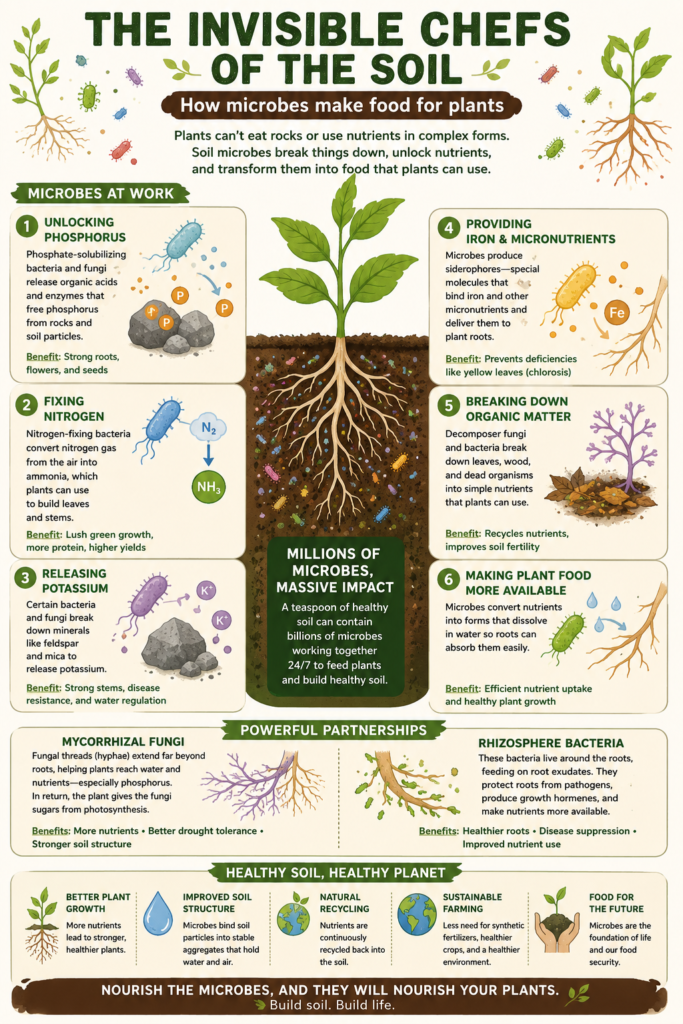
The soil beneath our feet contains enormous reserves of minerals such as phosphorus, potassium, iron, and other essential nutrients. The problem is that most of these nutrients are locked away in forms that plant roots cannot absorb. Plants can only take up nutrients that are dissolved in water as specific ions or simple molecules. This is where microbes come in. Through a remarkable array of chemical processes, soil microbes act like microscopic miners and chemists, converting inaccessible nutrients into forms that plants can use.
Nature’s Chemical Engineers
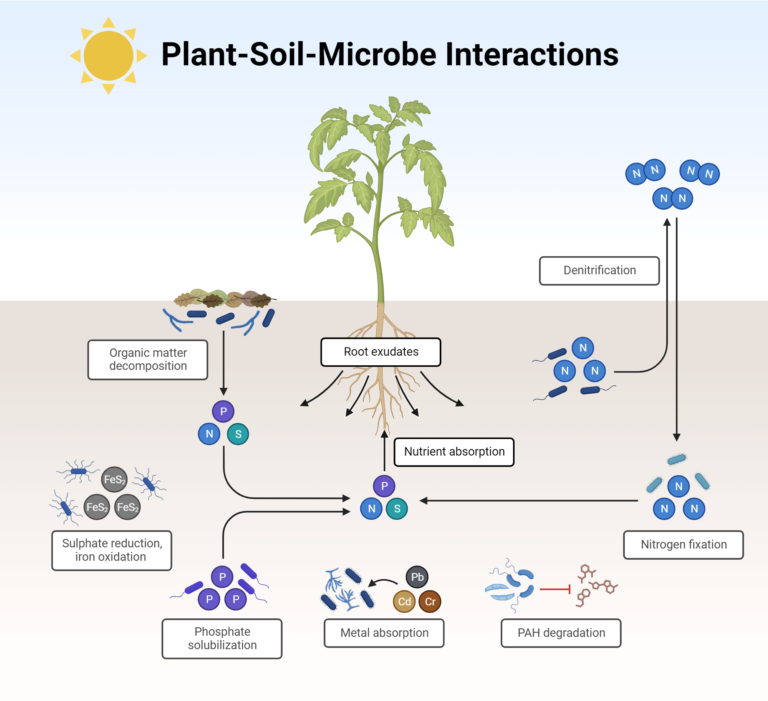
Many bacteria and fungi release organic acids and enzymes into the soil. These compounds dissolve minerals and break down complex organic matter, releasing nutrients into the surrounding environment.
For example:
- Phosphate-solubilizing bacteria unlock phosphorus trapped in rocks and soil particles.
- Decomposer fungi break down dead leaves, wood, and animal remains into simpler compounds.
- Certain microbes release siderophores—special molecules that bind iron and make it more available to plants.
In effect, microbes manufacture a nutrient buffet from materials that would otherwise remain unavailable.
Nitrogen: The Greatest Gift
Perhaps the most remarkable microbial service is nitrogen fixation. Although Earth’s atmosphere is almost 78% nitrogen gas, plants cannot use it directly. Specialized bacteria possess the enzyme nitrogenase, allowing them to convert atmospheric nitrogen into ammonia, which can then be transformed into plant-available forms.
Some of these bacteria live freely in the soil, while others form close partnerships with legumes such as beans, peas, and clover. Inside tiny nodules on the roots, these bacteria provide nitrogen to the plant in exchange for sugars produced through photosynthesis. This natural fertilizer factory reduces the need for synthetic nitrogen fertilizers and plays a crucial role in global food production.
The Underground Internet
Microbes do not work alone. Many plants form partnerships with mycorrhizal fungi, which extend thread-like structures called hyphae far into the soil. These fungal networks effectively increase the plant’s root system many times over, helping capture water and nutrients that roots alone could never reach. Some scientists even describe these networks as an “underground internet,” linking multiple plants together and allowing the movement of nutrients and chemical signals through the soil.
Recycling Everything
Every autumn leaf, fallen branch, dead insect, and animal carcass eventually becomes food for microbes. Through decomposition, microbes recycle carbon, nitrogen, phosphorus, sulfur, and countless other elements back into the soil. Without this recycling system, nutrients would become locked away in dead organic matter and ecosystems would eventually grind to a halt. The phrase “nothing goes to waste in nature” is largely thanks to microbial activity.
Building Healthy Soils
Microbes also improve soil structure. As they grow and produce sticky gel-like substances, they help bind soil particles into stable aggregates. This creates pores that improve water infiltration, aeration, and root growth while reducing erosion. Healthy microbial communities therefore make soils more resilient to drought and heavy rainfall.
Farming with Microbes
Modern agriculture is increasingly recognising the importance of working with, rather than against, soil microorganisms. Practices such as reducing excessive tillage, planting cover crops, applying compost, and minimizing unnecessary chemical inputs help maintain diverse microbial populations that naturally support crop growth. Researchers are also developing microbial inoculants—living products containing beneficial bacteria or fungi—to improve nutrient uptake and reduce dependence on synthetic fertilizers.
Tiny Organisms, Massive Impact
The next time you admire a lush garden or harvest fresh vegetables, remember that much of the real work happened underground.
Billions of microbes tirelessly dissolved minerals, fixed nitrogen, recycled dead matter, and delivered nutrients to waiting roots. They are Earth’s original agricultural engineers, sustaining plant life and, ultimately, all of us.
The health of our soils depends not just on what we add to them, but on nurturing the invisible communities that have been making food for plants since long before humans began farming.