
Slime Moulds: The Brainless Organisms That Can Solve Problems
They have no brain, no nervous system and no neurons. Yet slime moulds can navigate mazes, find efficient routes through networks, respond to experience and make surprisingly sophisticated decisions. So, are these strange organisms intelligent — or are we simply discovering that intelligence is not what we thought it was?
Imagine an organism that can find the shortest route through a maze, construct an efficient network connecting sources of food, and alter its behaviour after encountering an unpleasant experience. Now imagine that it has no brain, no nervous system and not even a single neuron.
Meet the slime mould.
These remarkable organisms have become some of the most intriguing subjects in the study of biological intelligence. They challenge our assumptions about how organisms process information, learn from their surroundings and solve problems. Their behaviour raises a fascinating possibility: perhaps intelligence does not require a brain.
1. What exactly is a slime mould?
Despite their name, slime moulds are neither true fungi nor conventional moulds. They are a diverse group of organisms with life cycles and evolutionary histories distinct from those of fungi, plants and animals.
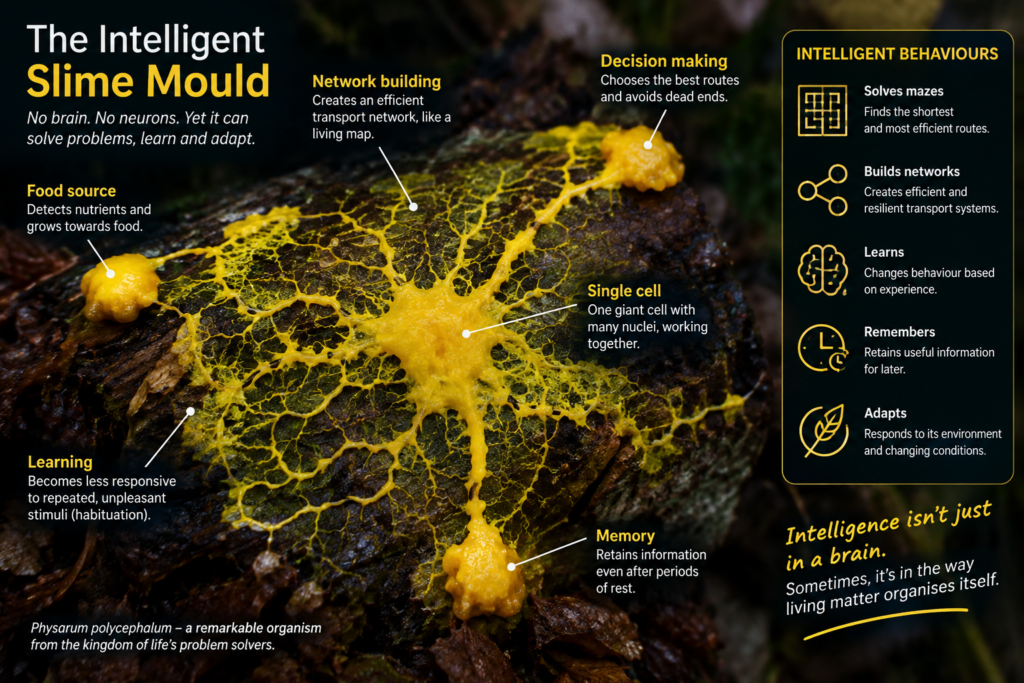
One of the best-known species is Physarum polycephalum, a yellow, spreading organism frequently used in laboratory experiments. It is particularly interesting because its feeding stage consists of a single enormous cell containing many nuclei.
This stage, called a plasmodium, can extend into a branching network of tubes that spreads across damp surfaces, rotting wood and forest litter in search of bacteria and other food sources. Think about that for a moment: what looks like a miniature network of veins is actually part of one giant cell.
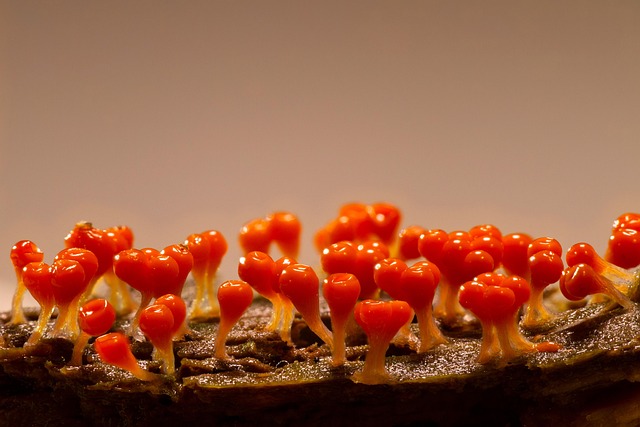
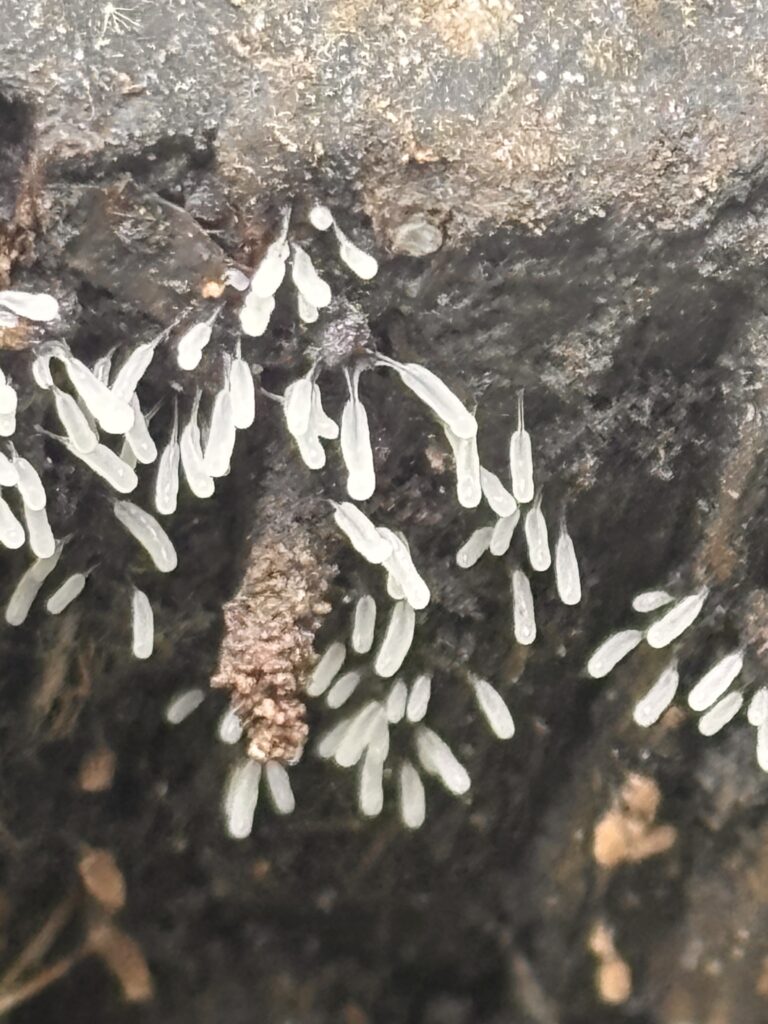
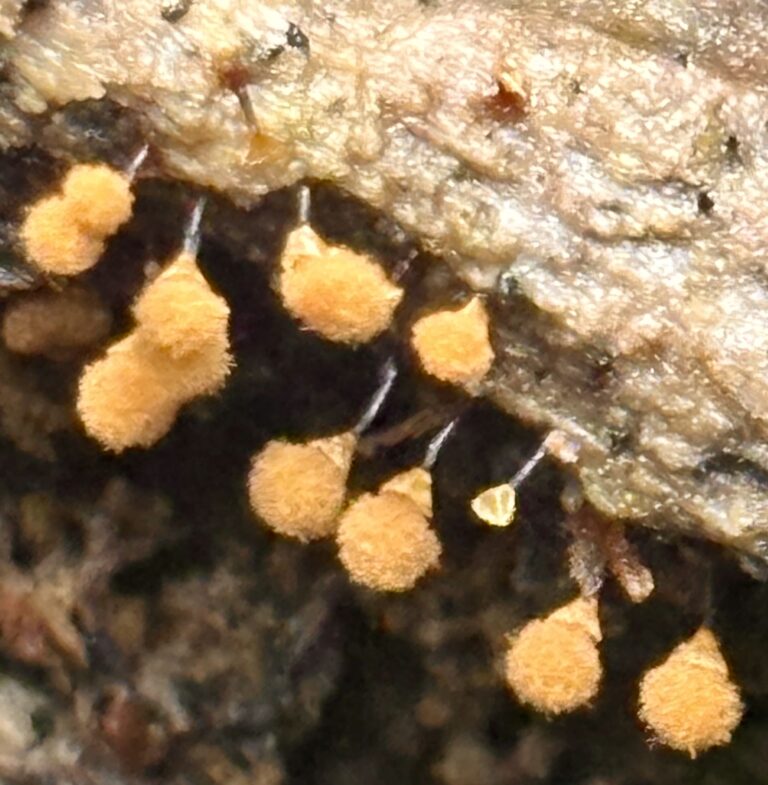
Other slime moulds, such as Fuligo septica, commonly called scrambled-egg slime, can form conspicuous yellow masses on decaying organic matter. Not all slime moulds share the same cellular organisation or behaviour, so the most striking research on problem-solving usually concerns Physarum.
Slime moulds are especially interesting because they occupy an unusual position in the study of life: they are capable of complex, coordinated behaviour without possessing the nervous system normally associated with decision-making.
2. The maze-solving experiment that changed biology
In 2000, Japanese researcher Toshiyuki Nakagaki and colleagues began investigating a question that seemed almost absurd: could a single-celled organism solve a maze? They placed Physarum polycephalum inside a maze and supplied food at two locations. Initially, the organism spread through multiple corridors, exploring different possible routes. Over time, it withdrew from dead ends and unnecessary passages, leaving a more direct connection between the food sources.
The result was published in Nature in 2000 and helped bring slime mould intelligence to international attention. A subsequent 2001 paper examined the maze-solving behaviour in greater detail. The organism had not planned its route in the way a human might. There was no central control centre calculating distances, weighing alternatives or drawing a mental map.
Instead, the solution emerged from the interaction between its growth, its internal transport network and the chemical conditions around it. This distinction is crucial. The slime mould did not need to understand the maze. It needed a biological process capable of producing an effective solution.
The surprising discovery was that sophisticated problem-solving could emerge from relatively simple biological mechanisms.
3. How can something without a brain make decisions?
To understand the phenomenon, we need to look inside the slime mould’s living network. The plasmodium consists of a continuous mass of cytoplasm containing many nuclei. Within it, a network of tubes transports nutrients and other substances.
The cytoplasm flows rhythmically back and forth as the tubes contract and relax. These oscillations are driven by cellular machinery involving actin and myosin, proteins also involved in muscle contraction in animals.
As the slime mould encounters food, chemicals, light, moisture and other environmental signals, its growth and internal flow patterns change. Tubes carrying useful resources may become wider, while less useful branches shrink or disappear.
Over time, the network is reshaped by feedback between the organism and its environment.
The process can be understood as a simple biological optimisation system:
- Explore: extend branches into the surrounding environment.
- Sense: respond to nutrients, chemicals, moisture and other conditions.
- Transport: move resources through the interconnected tubes.
- Adjust: reinforce productive pathways and reduce less useful ones.
- Repeat: continuously refine the network as conditions change.
No single tube makes the decision. The behaviour emerges from the activity of the entire system.
Scientists are still investigating precisely how the molecular and mechanical processes involved combine to produce learning and adaptive behaviour. The network is a useful explanatory model, but it is not simply a miniature brain made of slime.
4. A living organism that builds efficient transport networks
One of the most remarkable demonstrations of slime mould behaviour came from an experiment inspired by human infrastructure. In 2010, researchers led by Atsushi Tero placed food sources on a surface arranged to represent major cities around Tokyo. They then allowed Physarum to grow between the food sources. The slime mould formed a network of connecting tubes. Remarkably, the resulting arrangement shared important features with the existing Tokyo rail network, including efficient connections between multiple destinations. The researchers published their findings in Science, showing how the organism’s self-organising behaviour could produce networks that balanced transport efficiency, resilience and construction cost.
Why is this useful?
Designing a transport network involves competing demands. The shortest route is not necessarily the best overall solution if it creates a vulnerable bottleneck. A robust network may need several alternative connections, even if these increase its total length. The slime mould’s network provides an example of how local biological processes can generate useful solutions to complicated engineering problems.
Researchers have explored these principles in computational models and network design. However, the organism does not outperform conventional algorithms at every task, and its biological networks are not universally superior to human-designed systems.
Its real significance is that useful optimisation can arise without a central planner.
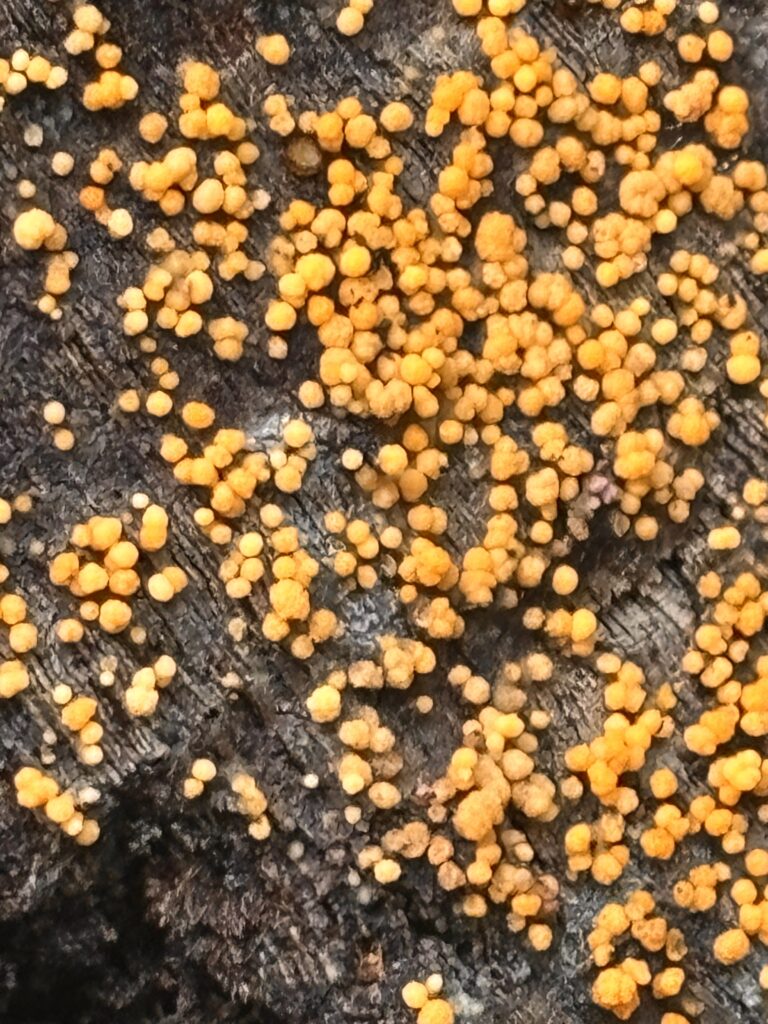
5. Can a slime mould actually learn?
Solving a maze might be explained by growth patterns and feedback alone. Learning is a more challenging question. If an organism changes its behaviour because of previous experience, does that count as learning even if it has no neurons? In a study published in 2016, researchers investigated a basic form of learning called habituation. They repeatedly exposed Physarum polycephalum to substances it normally avoids, including quinine or caffeine.
With repeated exposure, the organisms became less responsive to these unpleasant stimuli. After the stimulus was withheld for a period, their responsiveness returned. The researchers also tested whether the effect was specific to the stimulus, helping distinguish learning from simple sensory fatigue. Habituation is familiar in animals. For example, a bird may initially fly away whenever a harmless noise occurs but eventually stop reacting when the sound repeatedly proves irrelevant.
The slime mould’s behaviour suggests that a comparable basic process can occur without a nervous system. This is not evidence that it consciously decides to tolerate an unpleasant substance. Rather, its response changes as a consequence of experience. That distinction matters: learning can be demonstrated through changes in behaviour without proving conscious awareness.
Can it remember after a long rest?
An even more intriguing result came from research published in 2019. Scientists trained slime moulds to become habituated to sodium, then allowed them to enter a dormant state called a sclerotium.
After the organisms were revived, some of the learned behavioural response remained detectable. The researchers proposed that retained chemicals could help preserve information about the earlier experience. This is a very different kind of memory from the neural and synaptic mechanisms studied in animals. It suggests that information influencing future behaviour can be maintained through biochemical processes, although the precise mechanisms remain under investigation.
In other words, memory need not always mean storing a representation in a brain. At its most basic, it can mean that an organism’s present state has been altered by its past, changing what it does next.
6. How does a slime mould know where to find food?
Slime moulds are not simply spreading randomly. They respond to chemical gradients and can adjust their growth according to the nutritional opportunities available. Experiments have shown that Physarum polycephalum can regulate its nutrient intake when offered different combinations of protein and carbohydrates. It tends to favour food combinations that help it meet its nutritional requirements.
This ability is particularly interesting because it demonstrates a form of decision-making without language, symbolic reasoning or a nervous system.
The organism does not need to calculate a nutritional ratio consciously. Its chemical sensing, growth and resource-transport mechanisms collectively produce behaviour that can be adaptive.
There is an important lesson here. Evolution does not necessarily favour organisms that understand their environment. It favours mechanisms that help them survive and reproduce.
A slime mould that responds effectively to nutrients can succeed even without knowing what a nutrient is.
7. Is slime mould intelligence really intelligence?
This is where the science becomes philosophically interesting. What do we mean when we call something intelligent?
If intelligence means the ability to solve problems, adapt to changing conditions, use information from past experience and select between alternatives, slime moulds display several of these characteristics.
A 2023 review by Chris R. Reid examined the evidence for sensing, navigation, communication, decision-making, memory and learning in Physarum polycephalum. The review argued that slime moulds provide an important model for studying cognition outside the animal nervous system.
But there is a distinction between several concepts:
| Concept | What it means for slime moulds |
|---|---|
| Sensing | Detecting and responding to environmental conditions. |
| Problem-solving | Finding effective routes to food or other resources. |
| Learning | Changing behaviour as a consequence of experience. |
| Memory | Retaining information or changes that influence later behaviour. |
| Consciousness | Having subjective experiences — something not established by these experiments. |
The first four have experimental support to varying degrees. The last remains an open question, and the maze experiments provide no evidence that slime moulds experience thoughts or feelings as humans do. Some researchers favour terms such as minimal cognition, basal cognition or non-neural intelligence to describe these capabilities. Others emphasise that apparently intelligent behaviour can emerge from biochemical processes without requiring cognition in the richer sense used for animals. Neither position requires us to dismiss what the organism can do. The scientific challenge is to explain precisely which mechanisms generate its behaviour, and to decide what definitions of intelligence are useful across different forms of life.
8. What slime moulds can teach us about artificial intelligence
The study of slime moulds has implications beyond biology. Many computer systems solve problems by processing information through a central processor or following algorithms designed by humans. Slime moulds offer a different model: a distributed system in which local interactions generate an overall pattern.
Researchers have explored whether these principles can help design systems for:
- Transport and telecommunications networks.
- Route optimisation and resource allocation.
- Adaptive systems that respond to changing environments.
- Computational models inspired by biological self-organisation.
The analogy with artificial intelligence should not be taken too far. A slime mould is not a digital computer, and its behaviour does not demonstrate human-like reasoning. Nevertheless, it offers a living example of how complex outcomes can arise from relatively simple rules and feedback. This is an especially valuable idea for engineers designing systems that must adapt when conditions change or when parts of a network fail. Rather than dictating every detail centrally, it may sometimes be possible to build a system that discovers useful solutions through local responses and repeated adjustment.
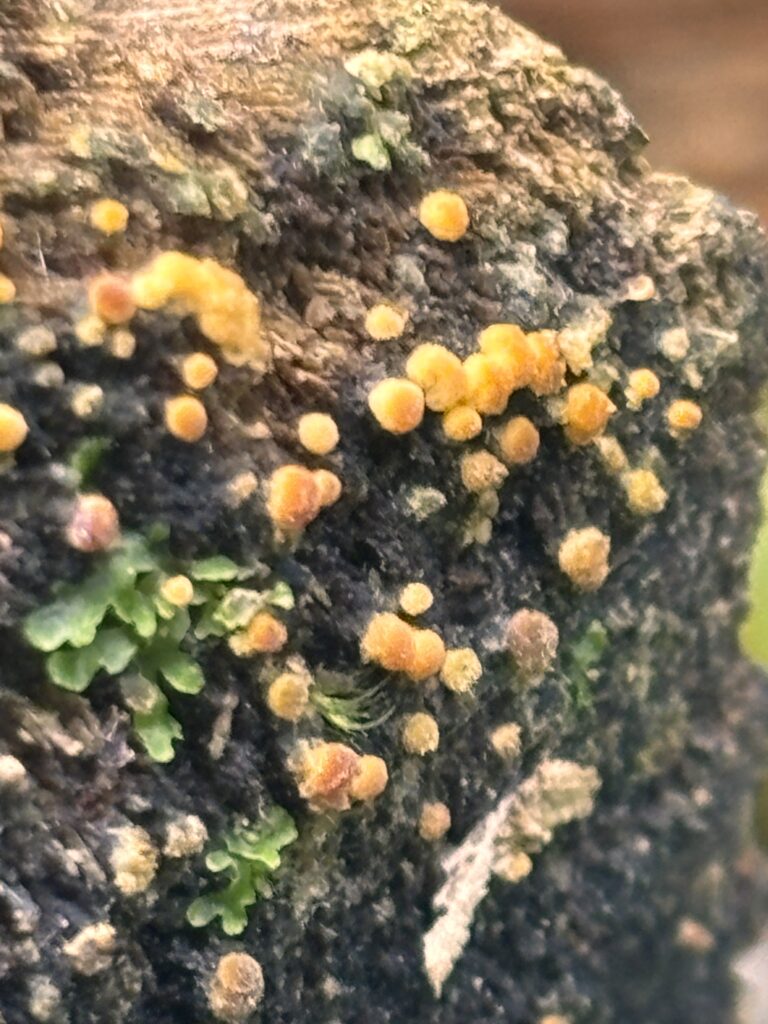
9. What about the slime mould’s evolutionary history?
Slime moulds are particularly interesting because their problem-solving abilities occur in organisms without neurons.
This raises a major evolutionary question: did some of the fundamental processes underlying cognition evolve long before brains appeared?
We cannot answer that question simply by observing a modern slime mould. Its evolutionary history is complex, and the origins of particular behaviours cannot be established from its present-day abilities alone.
However, research into slime moulds does show that many basic components of adaptive behaviour do not require a nervous system.
Cells can sense chemical conditions, communicate through molecular signals, change their internal organisation and respond differently after experience. These are fundamental biological processes, not exclusive properties of animals.
The findings encourage scientists to investigate cognition as a spectrum of biological capacities rather than treating it as something that appeared fully formed when nervous systems evolved.
They also remind us that a brain is one way of organising information and controlling behaviour — not necessarily the only way.
Conclusion: Rethinking what it means to be intelligent
Slime moulds are not tiny people in yellow disguises. They do not need to think like humans to be remarkable.
A single, multinucleate cell can explore its surroundings, construct efficient networks, respond to environmental challenges and modify its behaviour through experience. Researchers are still working to understand the molecular mechanisms behind these abilities, but the evidence already challenges the assumption that sophisticated adaptive behaviour requires a brain.
Perhaps the most important lesson is not that slime moulds are secretly as intelligent as animals. It is that intelligence, learning and memory may have simpler biological foundations than we once imagined.
Next time you see a yellow, gelatinous mass spreading across a damp log, remember that you are looking at an organism whose behaviour can reveal something profound about the nature of life.
It has no brain to think with, yet it can solve problems.
And that raises a question worth pondering: how much of what we call intelligence depends on having a brain, and how much depends on the remarkable ability of living matter to organise itself?
References and further reading
These scientific publications provide a starting point for exploring the evidence in greater depth.
1. Nakagaki, T., Yamada, H. and Tóth, Á. (2000). Intelligence: Maze-solving by an amoeboid organism. Nature, 407, 470. https\://doi.org/10.1038/35035159
2. Nakagaki, T. (2001). Smart behavior of true slime mold in a labyrinth. Research in Microbiology, 152(9), 767–770. https\://doi.org/10.1016/S0923-2508(01)01259-1
3. Tero, A. et al. (2010). Rules for biologically inspired adaptive network design. Science, 327(5964), 439–442. https\://doi.org/10.1126/science.1177894
4. Boussard, A. et al. (2019). Memory inception and preservation in slime moulds: The quest for a common mechanism. Philosophical Transactions of the Royal Society B, 374. https\://pmc.ncbi.nlm.nih.gov/articles/PMC6553583/
5. Boussard, A. et al. (2021). Adaptive behaviour and learning in slime moulds: The role of oscillations. Philosophical Transactions of the Royal Society B, 376, 20190757. https\://doi.org/10.1098/rstb.2019.0757
6. Reid, C.R. (2023). Thoughts from the forest floor: a review of cognition in the slime mould Physarum polycephalum. Animal Cognition, 26, 1783–1797. https\://doi.org/10.1007/s10071-023-01782-1
7. Boisseau, R.P., Vogel, D. and Dussutour, A. (2016). Habituation in non-neural organisms: evidence from slime moulds. Proceedings of the Royal Society B, 283, 20160446. https\://doi.org/10.1098/rspb.2016.0446